Mycall is Pe1akf.
Index
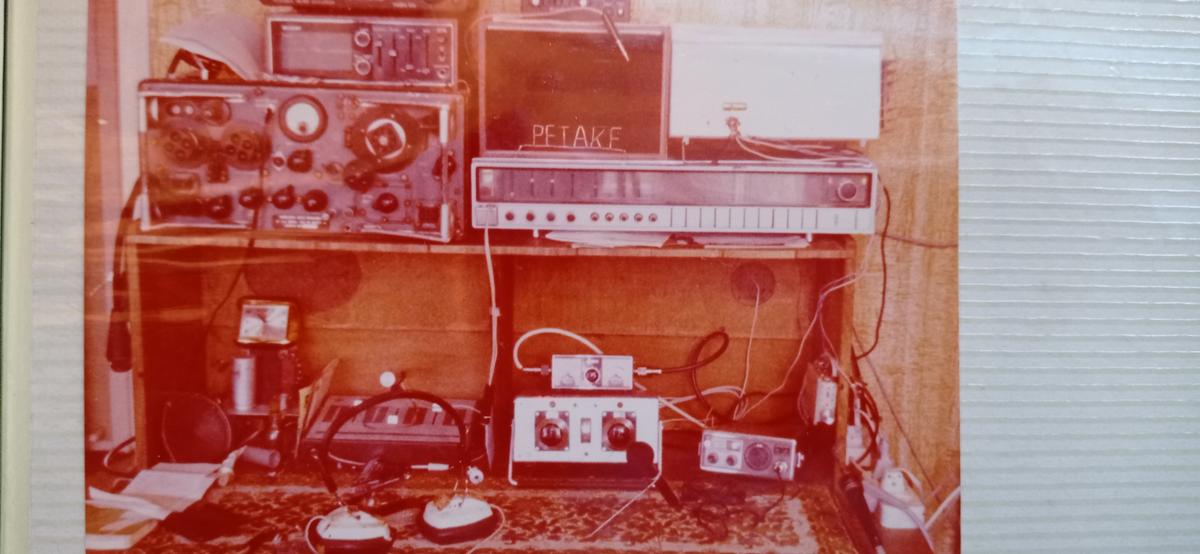
Starting with ham operations in 1976. On the 2 meterband with a Kenwood TR2200. With some x-tals.
Later I bought a TR7200, with a vfo. The vfo was not very accurate, so I build another vfo with a leddisplay for the frequency.
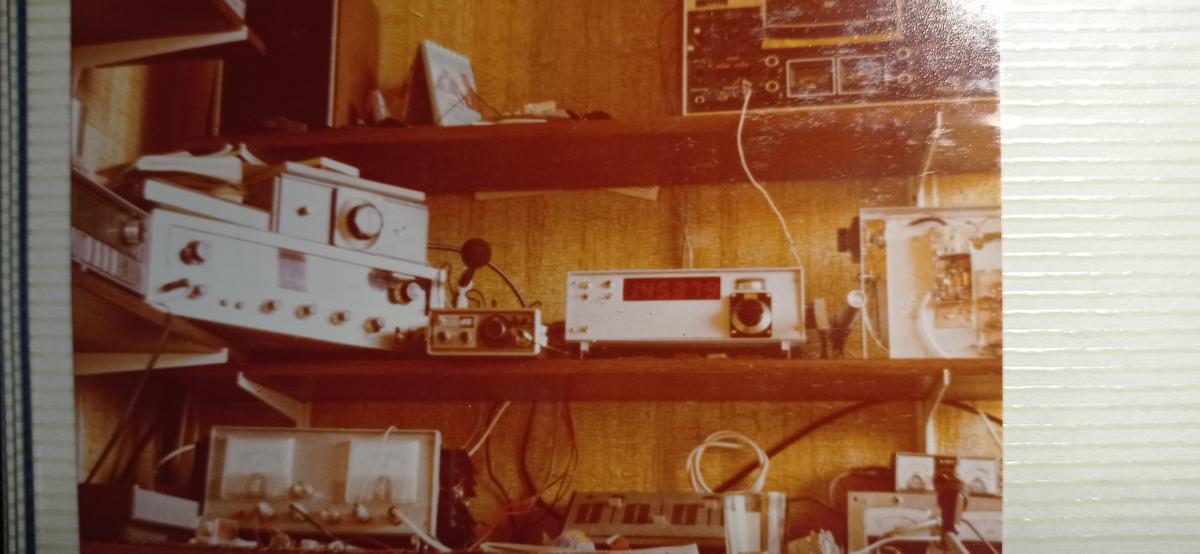
I also was interested in packet radio. Via CBM-64 I made packet connections with serveral ham's. I also investiged the Shortwave with code3.
Some old friends were transmitting on the 70cm band with big antenna's and in broadband with stereo. I did the same and I made several connections with them and others on the 70cm band. Because of the limited space on 70cm, I build a transmitter for 23cm, also in stereo with a loop-yagi.
Atv. The same friends were starting with ATV. First in AM on 70cm, later on 23cm. All in AM.
After some time we started with FM modulation, which we could simply receive with satellite receivers. We worked on several frequencies, also on 13cm. I also made a 10Ghz transmitter with a gunn diode. For a long time I had a connection with a ham-friend. We had a duplex ATV connection from 23cm to 10Ghz, over 1km (1980, in Amsterdam).
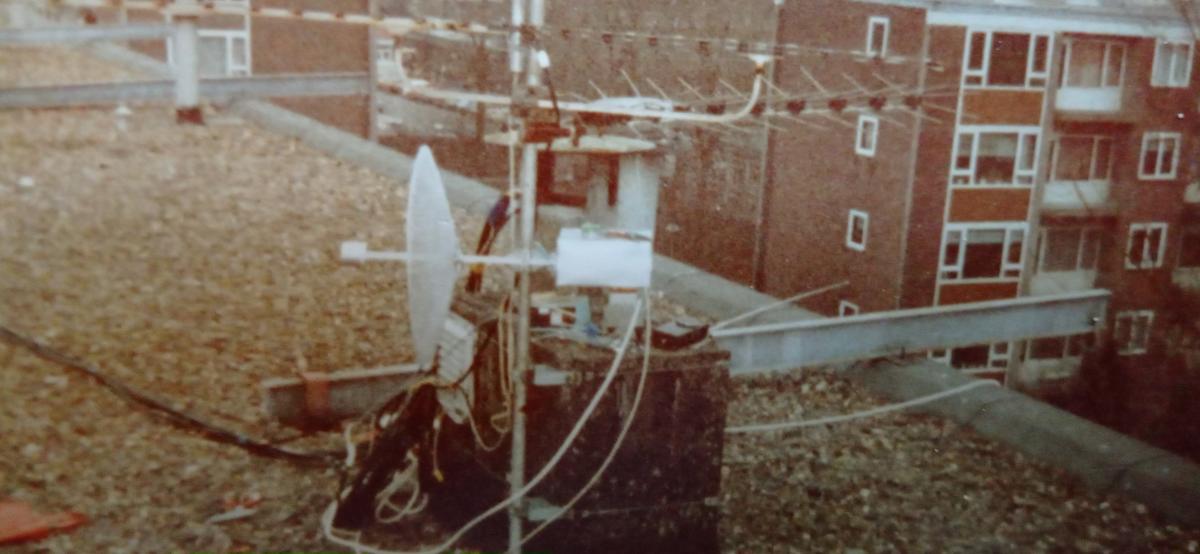
The longest distance I made with 10Ghz was from Almere to Alkmaar with a 100Mw gunn-diode transmitter with small horn-antenna. They received me in color. This was in 1994.
 |
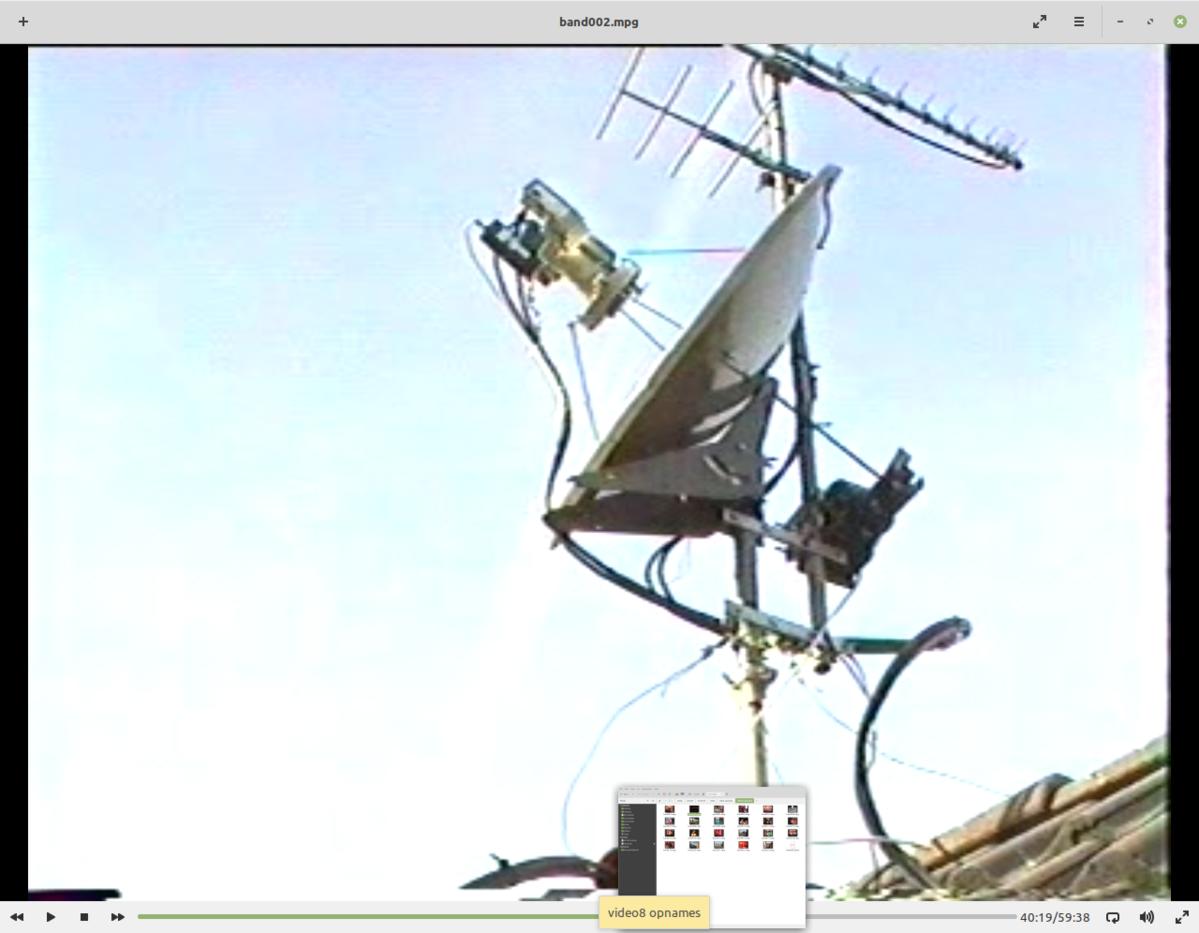 |
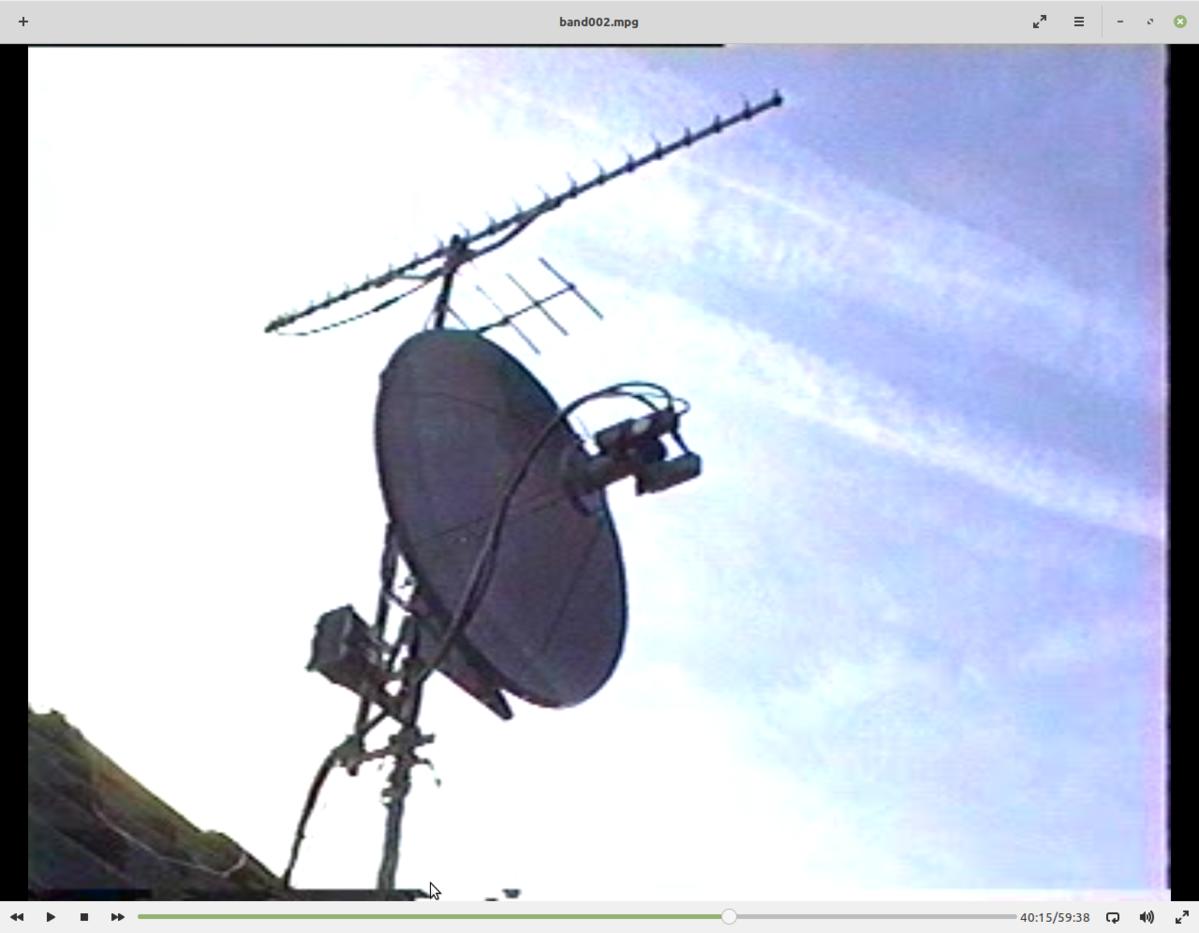
This is a 90cm dish with a chapparel feeder, for 2.3Ghz, 4Ghz and 10Ghz.
I made the elevator with two old rotors with variable resistors. The controlling was build in Quick-basic.
Later I had to remove the dish from the roof. The counsel of Almere had objections and I had to remove it.
In Almere a had serveral years an ATV connection with a friend from 23cm to 13cm. In the ATV connection I put a packet signal for packet connections. The mark and space were on 15kc and 22kc.
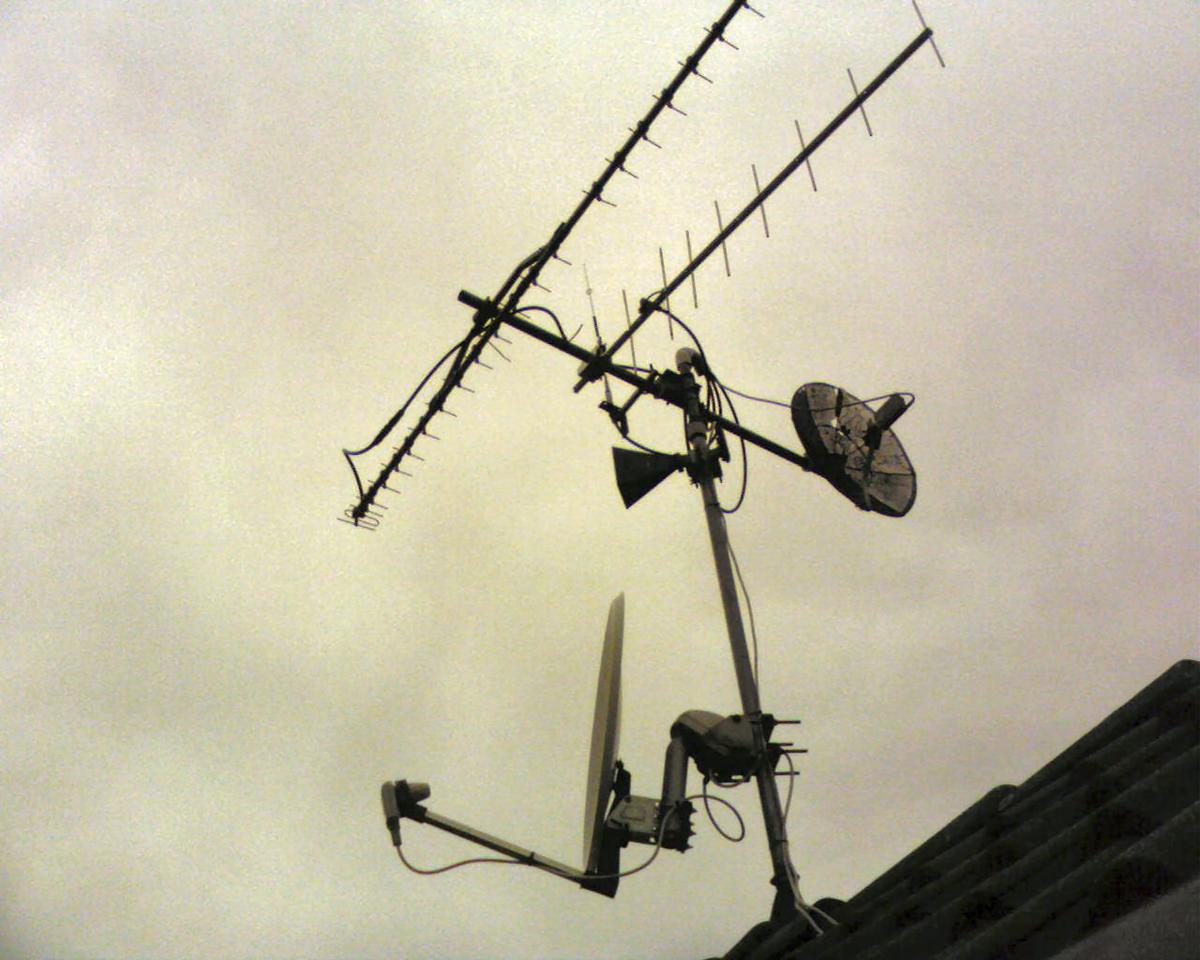
In 2008 I quit my Ham-operations, I started another hobby, playing guitar.
In 2015 I got again interested in HAM. I bought serveral SDR's and did a lot of testing with it.
Raspberry as hf server:
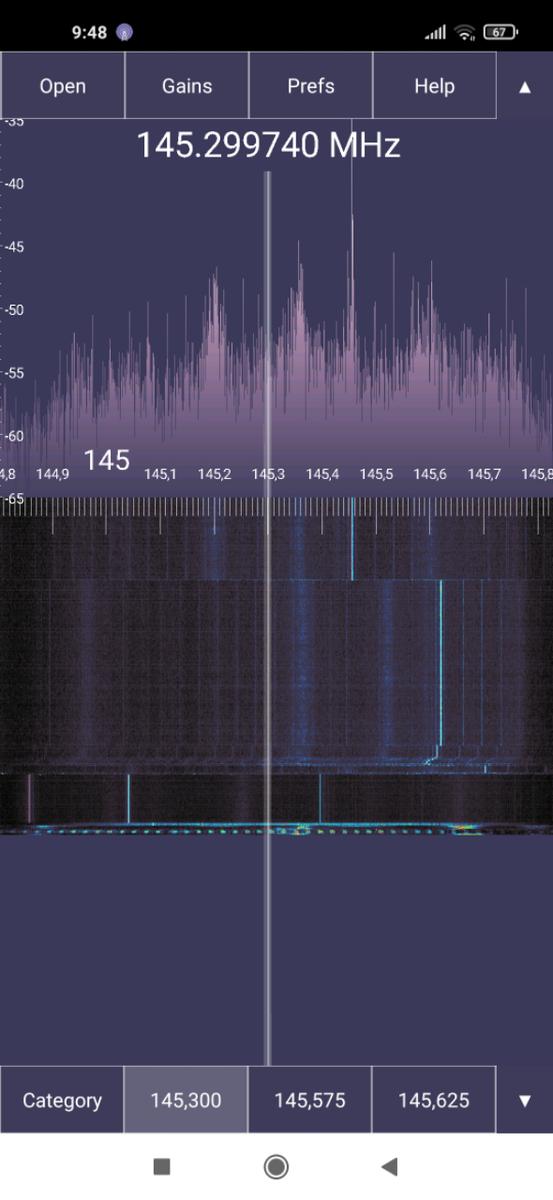
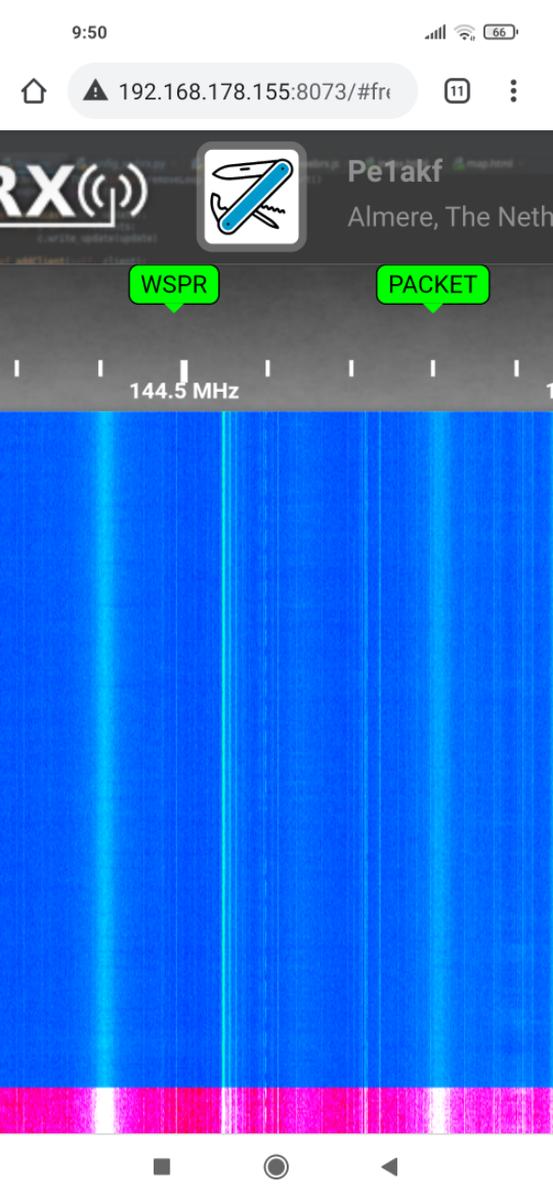
I use a raspberry to serve a sdr receiver for hf and vhf/uhf (OpenWebsdr). This receiver can be used with the pc, with a browser. I can receive al kind of signals. Also on my smartphone with the browser, or with sdrtouch.
I have two connections, one for hf and one for vhf/uhf. To select one of the two connections, I use the logo "OpenWebrx" on the top, to switch (I did change the code in the program).
I made a webpage for switching the tcp connections, for the sdrtcp, on port 1234 (hf) or 12345 (vhf/uhf).
 |
 |
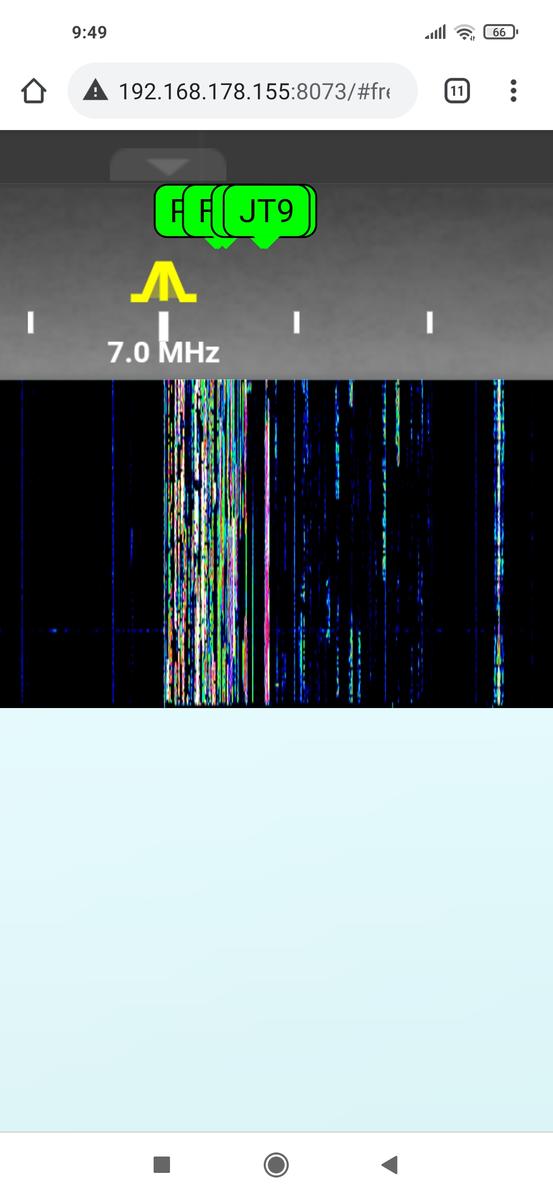 |
Sdrtouch vhf (via tcp), chrome openwebrx vhf, openwebrx hf.
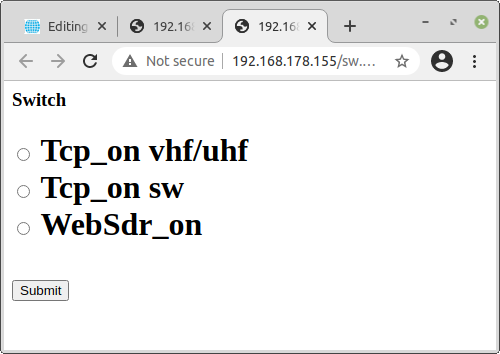
webpage on a raspberry, for selecting tcp of openwebsdr
In the end of 2019 I started to build a transmitter for WSPR with a raspberry (rpitx).
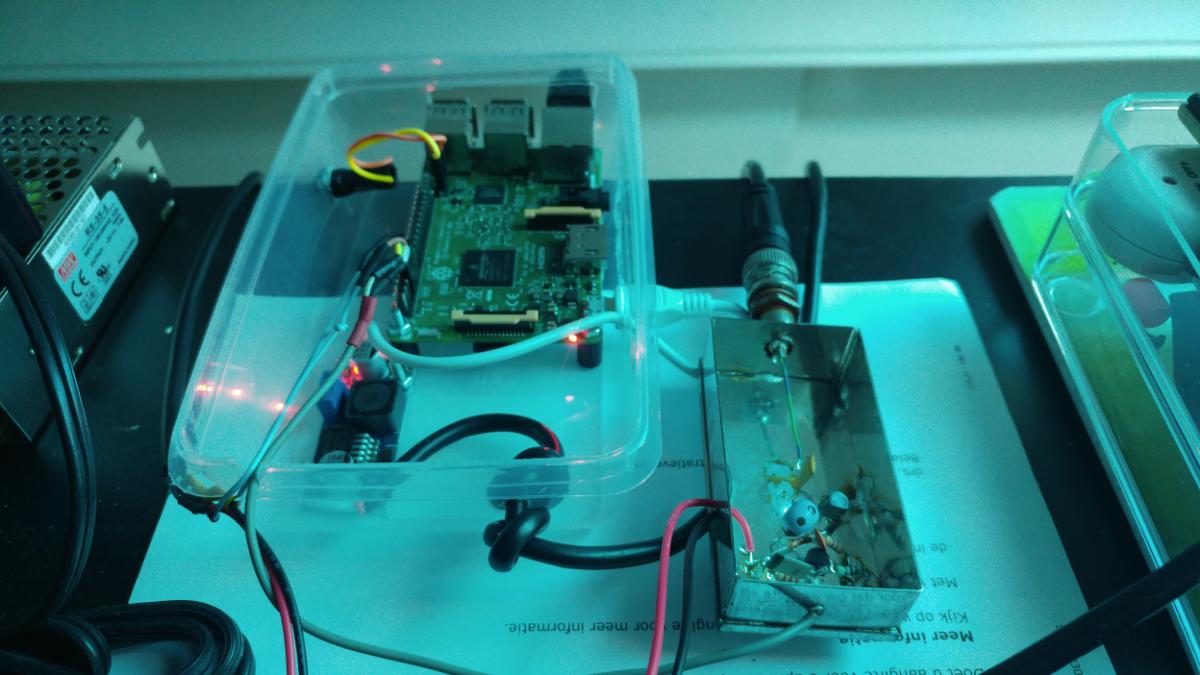
I made a lot of connections over big distances.
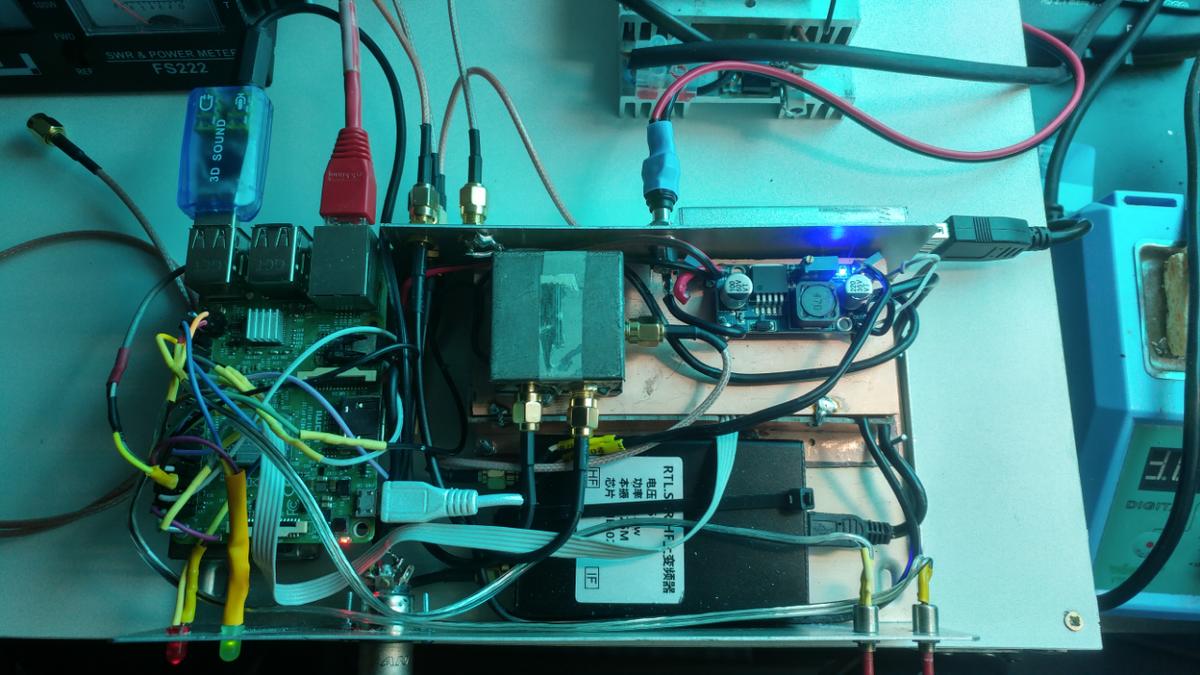
I build the transmitter in a case.
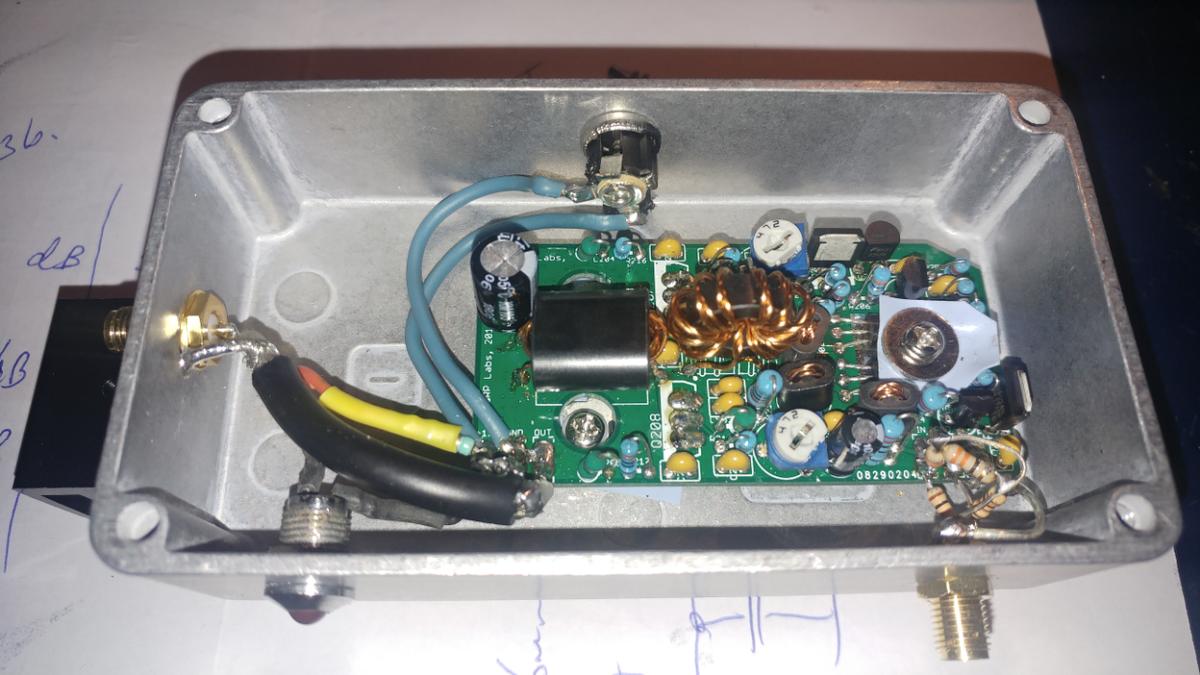
10Watt amplifier from qrplabs
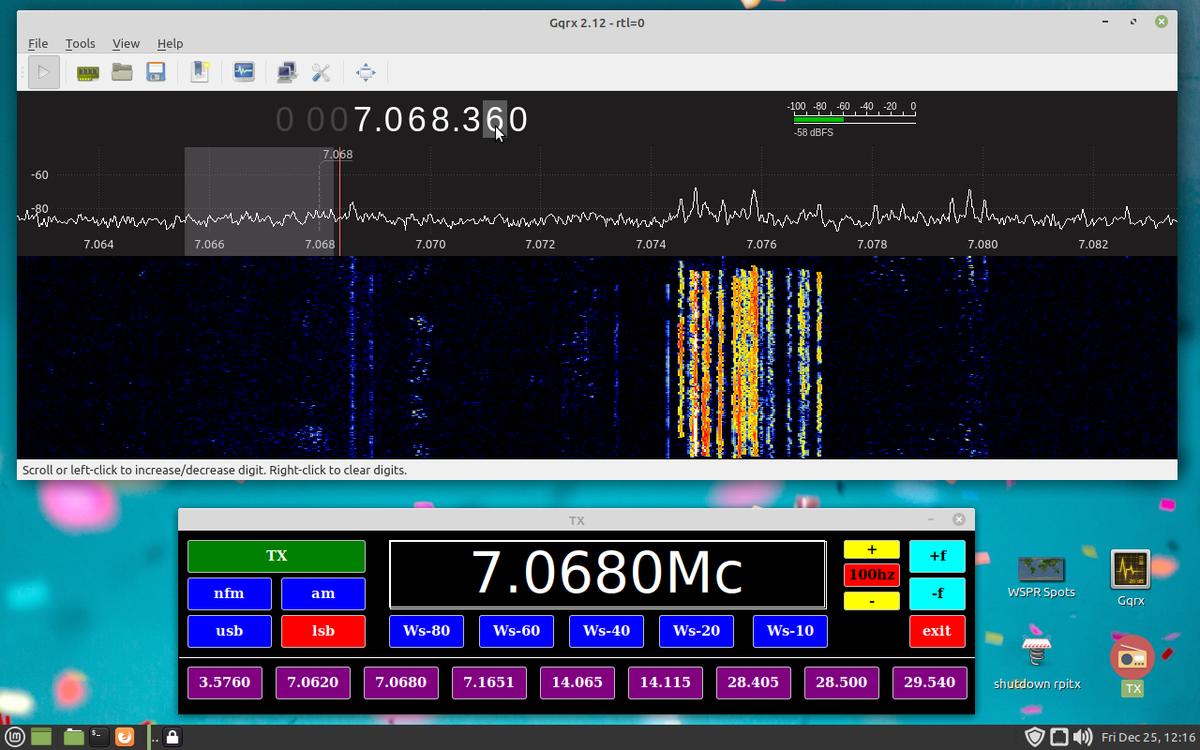
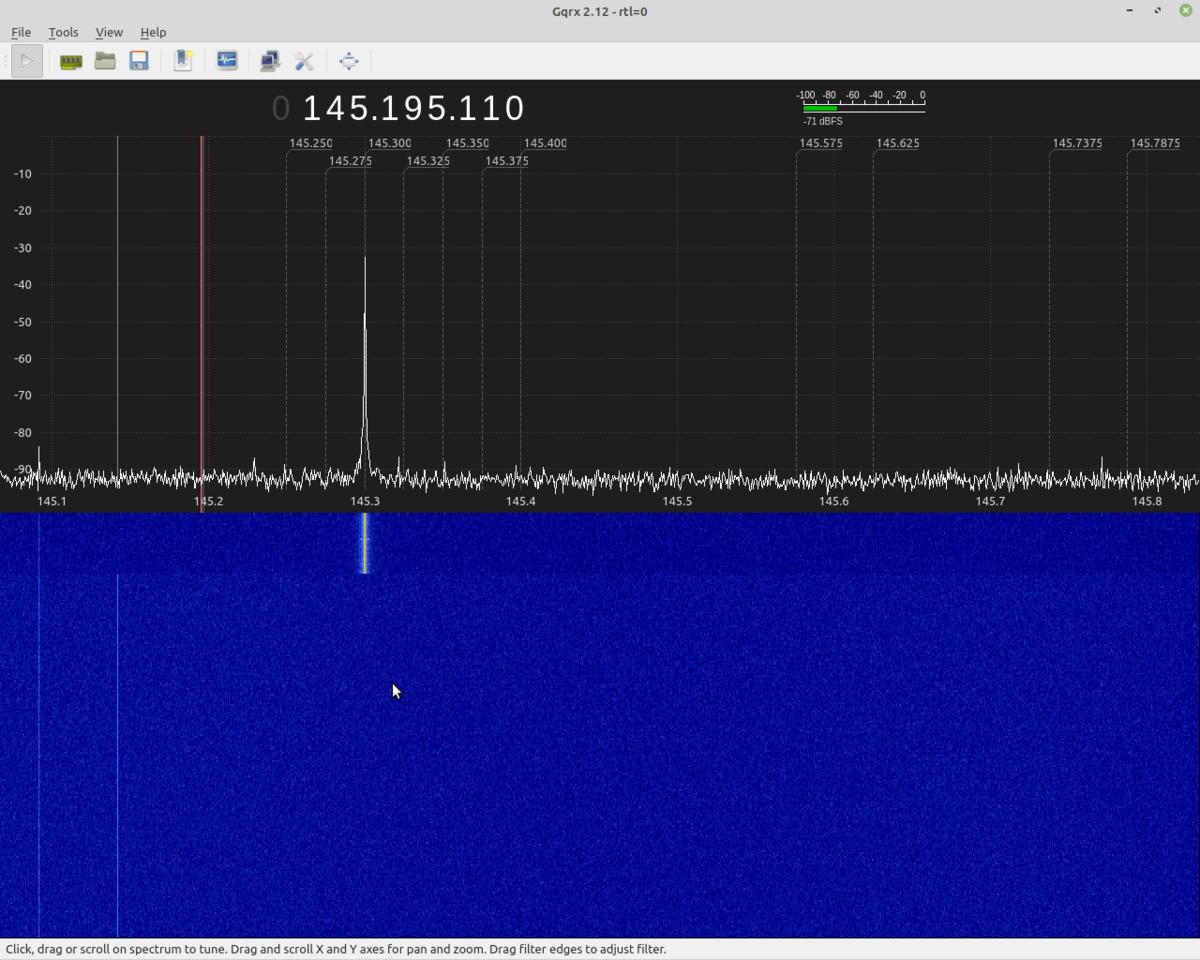
Recieving with GQRX and controlling the transmitter with a python program.
FT8:
Now I am starting with ft8, with the same raspberry.
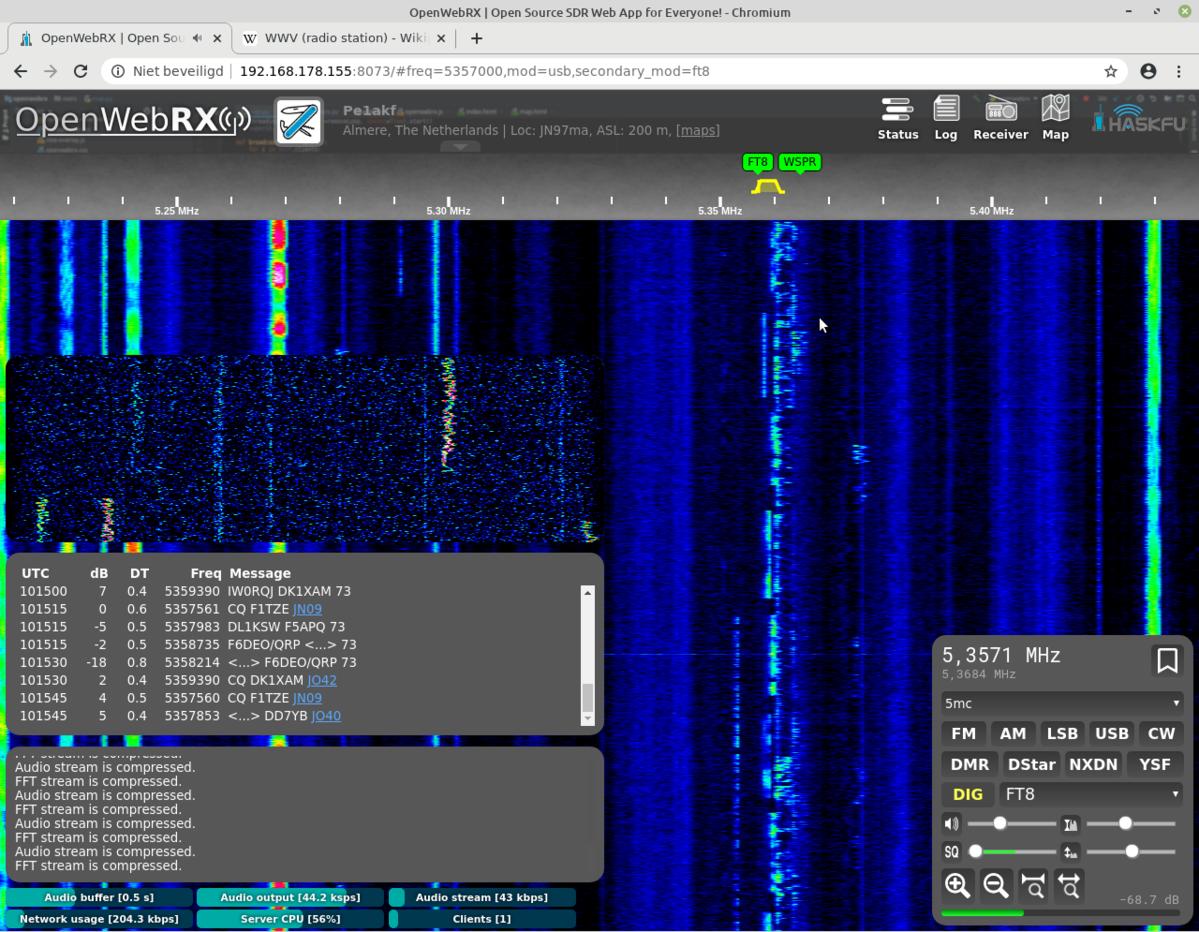
Monitoring ft8 on 60meters with openwebsdr
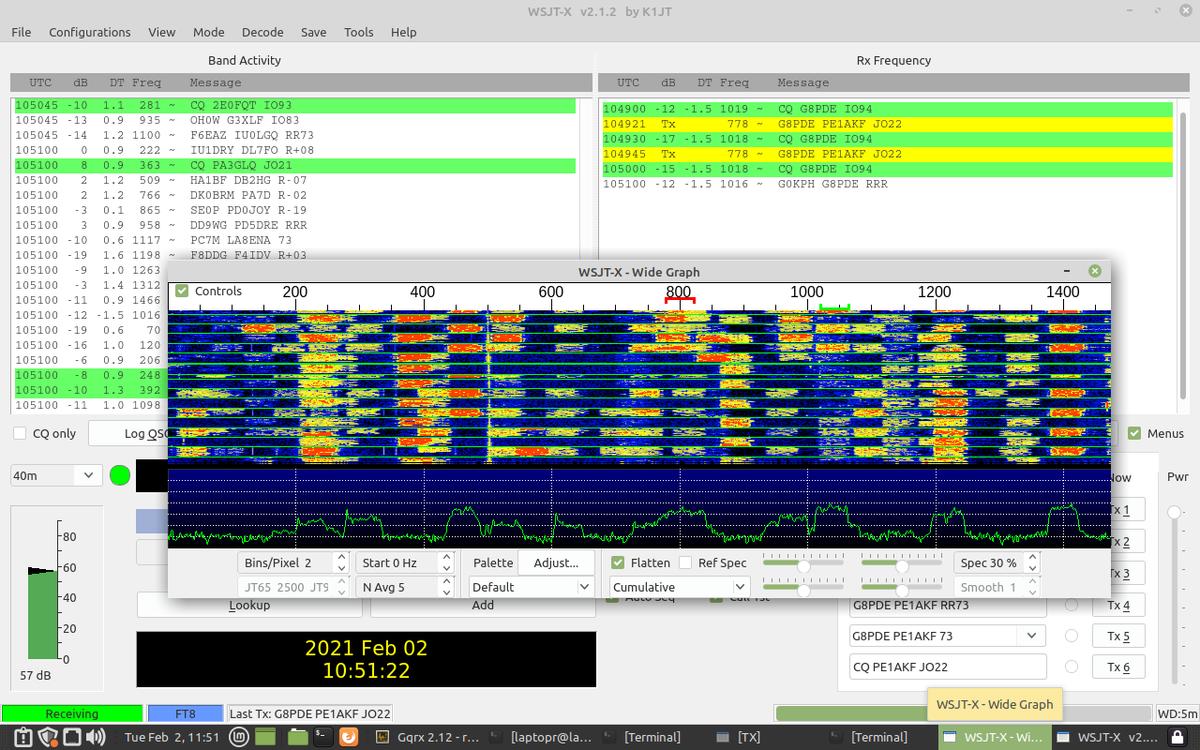 Working with wsjt-x on 40meters. I made a vox circuit for activating the rpitx, from the headphone output on the laptop. The sound is also going to the soundcard for usb transmitting.
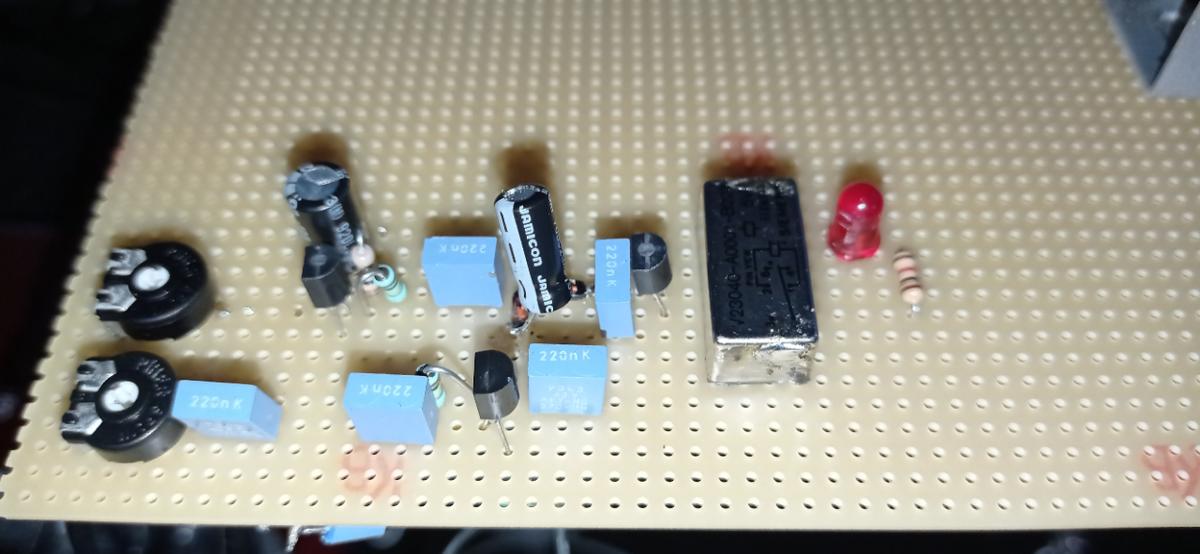 vox circuit
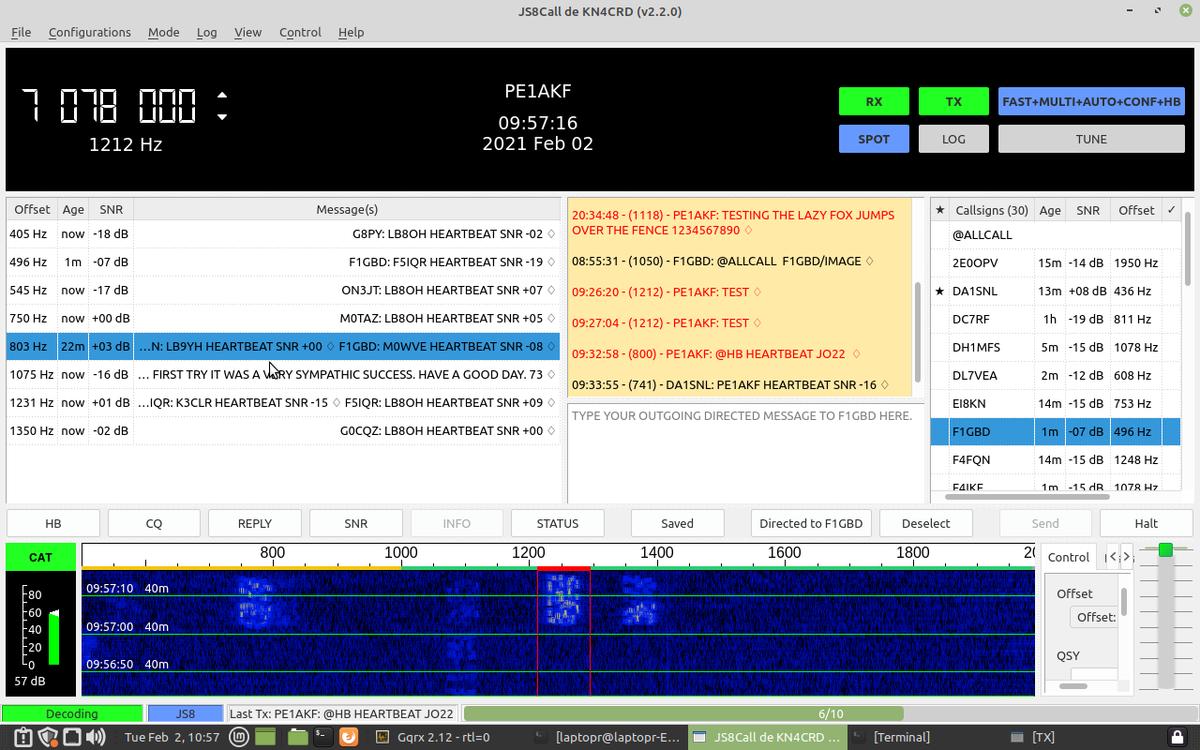
Testing with js8call on 40. I send a heartbeat and received a reply.
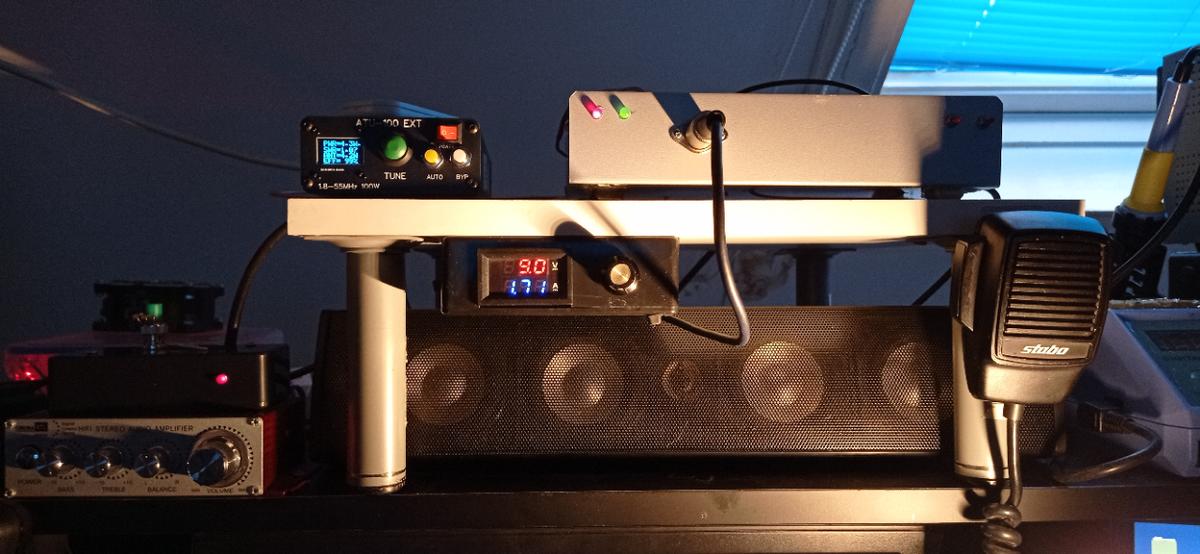
Transmitter completed with antenna tuner (ATU-100 EXT) and power regulating (4-13volt).
The vox unit is placed in a box.
Working with 40meter dipole in the garden, with 1:1 balun.
I made an amplifier for the 2 meter band, for transmitting on the 2Meterband.
I can switch the hf amplifier and filters for HF or VHF.
The amplifier has 3 transistors, the pt8519, blw90 and the blw91, for about 8 watt on 15volt.
At 20-03-2021 at 22:00 I made my first connection with SSB with the rpitx transmitter and the Gqrx as receiver on 144.385Mhz with Ronald PD2FD.
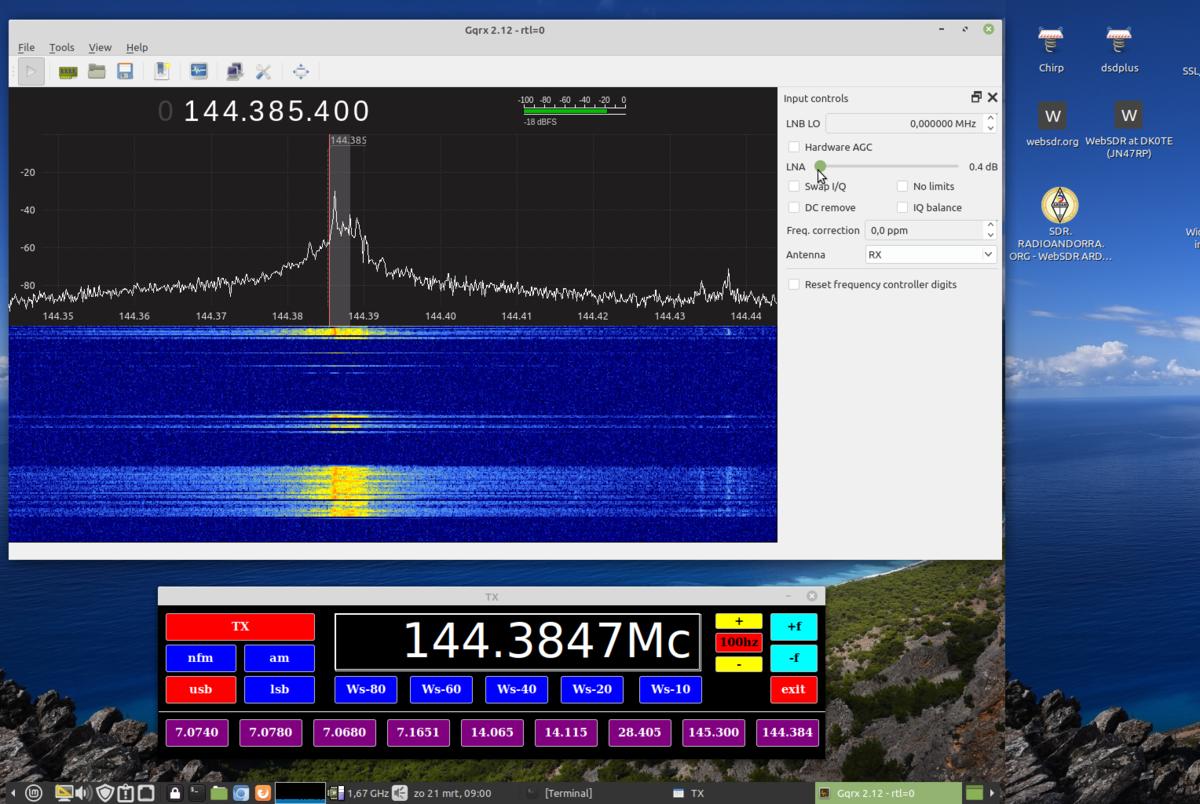
Testing on 144.385Mhz with USB.
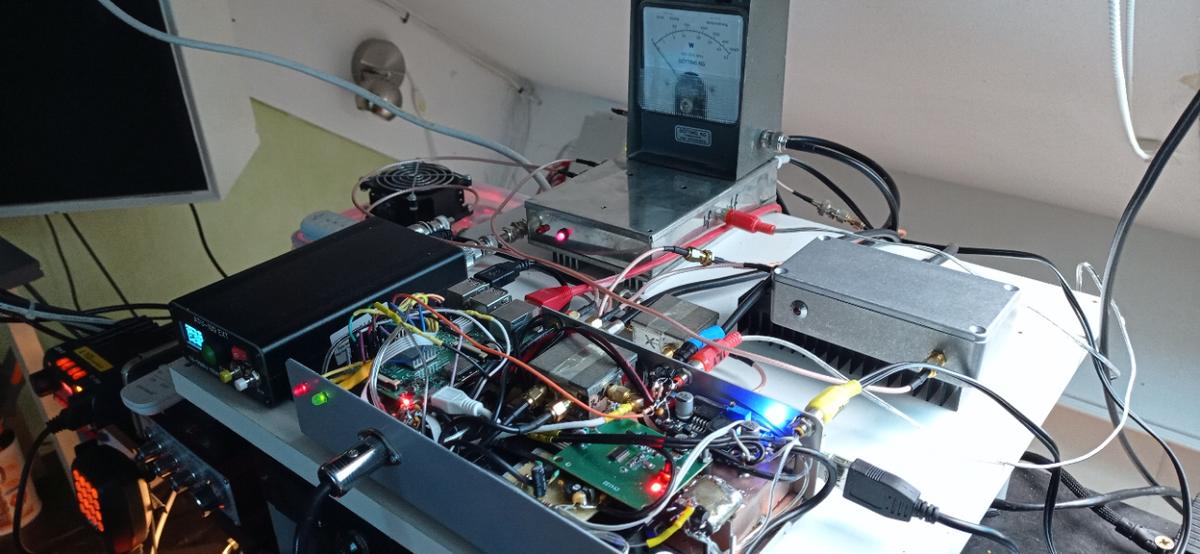
In the back, the amplifier with antenna relay and swr meter, in the front the rpitx, on the left the atu and on the right the qrplabs HF amplifier (10watt).
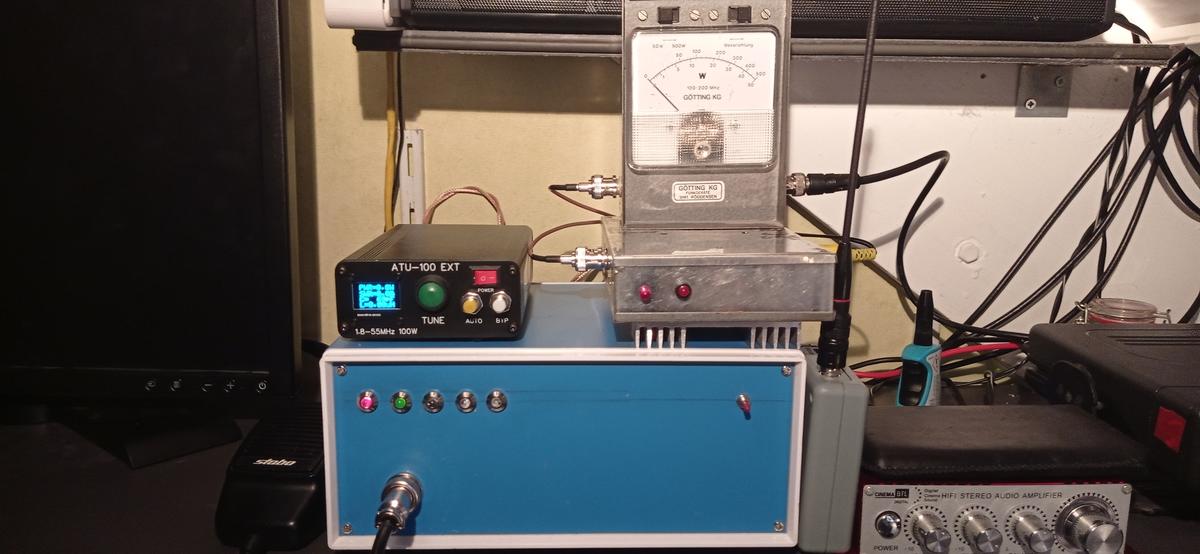
The rpitx build in a case. Can be used for HF and VHF (144-146mc).
Update 09-07-2022:
I removed the VHF part and include an rx part to the case.
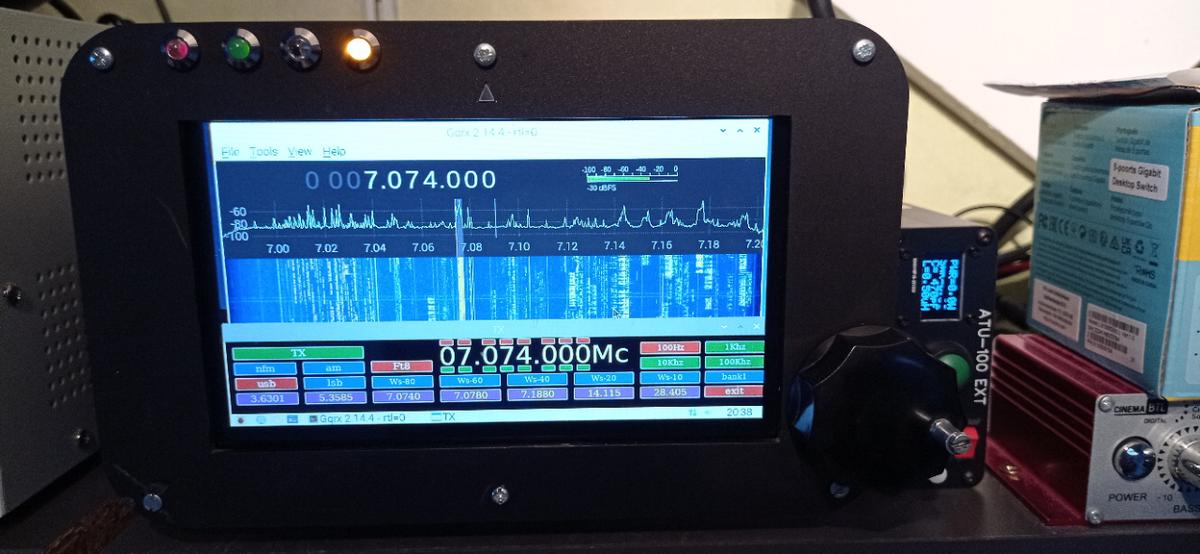
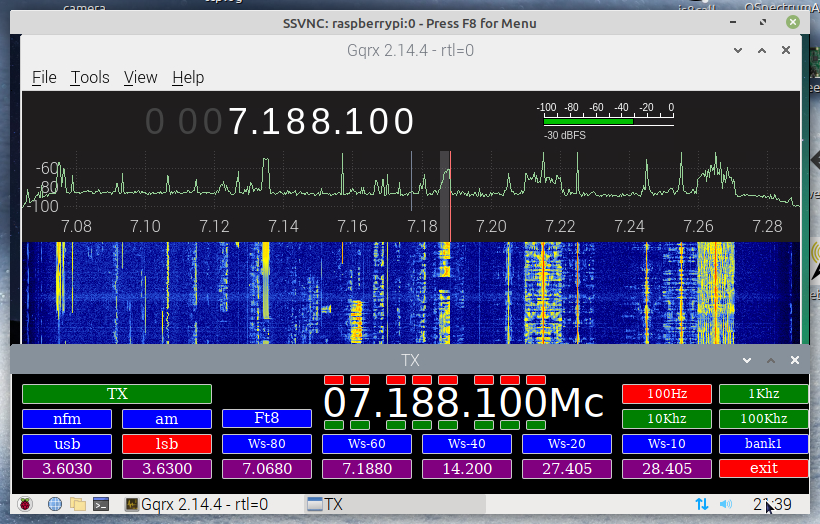
Now I can receive and transmit on the HF in one box. I also add a rotory for tuning. Default it is tuning with 100hz steps, but I can change the steps to 1khz, 10khz and 100khz. It is also possible to use more memory banks, for more memory channels.
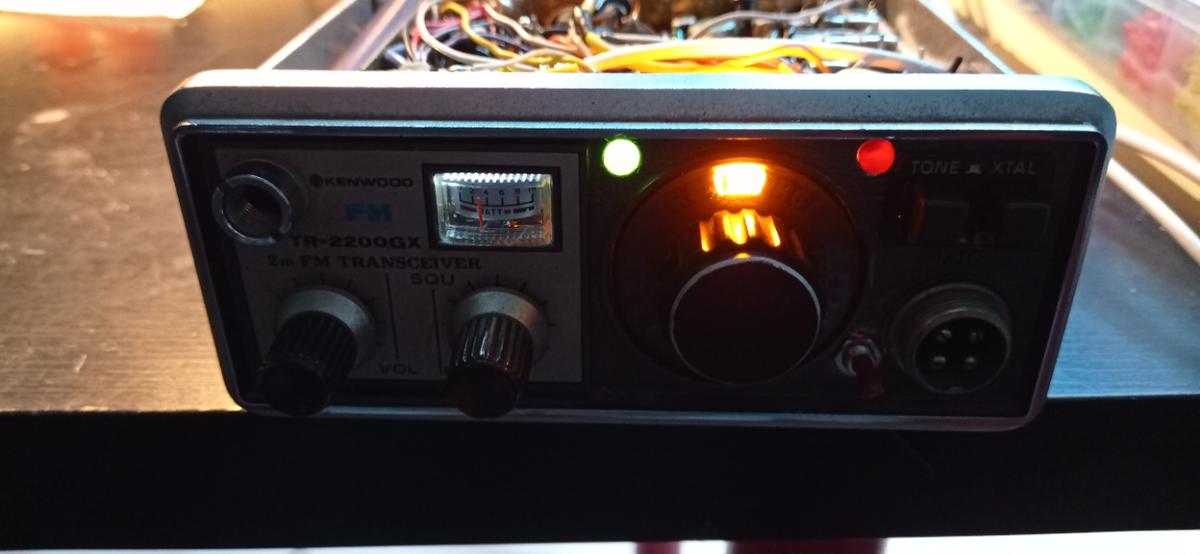
Recover Tr2200GX.
In the years 1976 I bought a Kenwood Tr2200gx in Amsterdam in the shop of PA0WIL. After years I stopped using this tranceiver, because of the use of xtals.
I saved it for the moment I had a good solution for the xtal's , to build a pll or a synthesizer.
Now, about 30 years later, I found the solution. I build a raspberry zero, with rpitx, in the battery compartment and now its working!
The channel switch is working with a 1n4148 matrix, connected with 4 gpio's. Via a binary code, the frequency is selected.
For the transmitting, I use the 12mhz signal, for recieving the 134mc signal, injected in the tr2200.
I did also build a 16f84 for the ctcss signal.
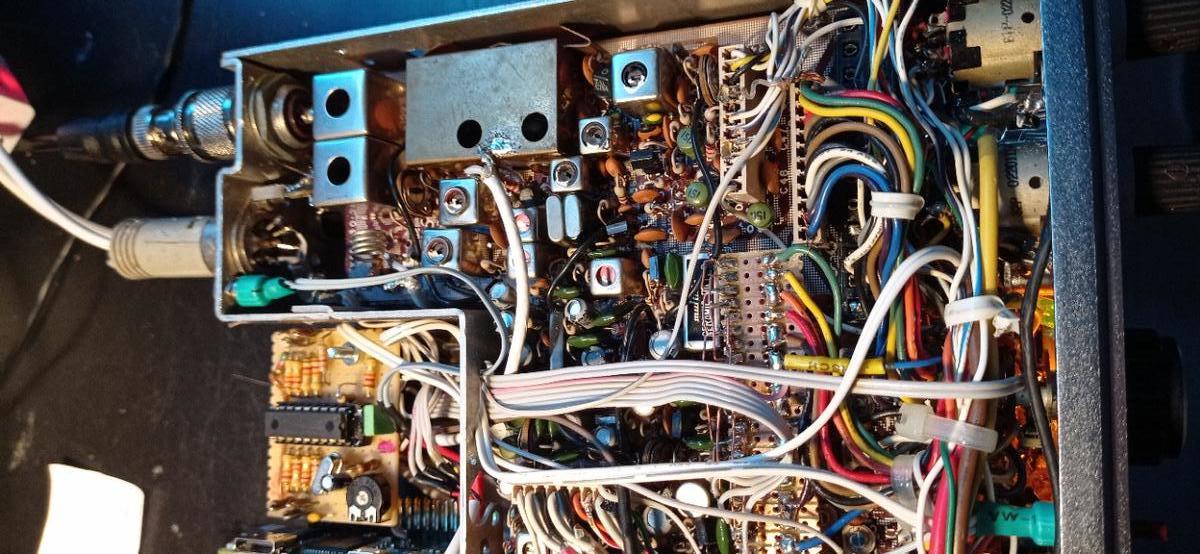
It is also possible on the PC to have a vfo python program to connect to the tr2200. This option is not ready build.
On the raspberry I have a directory, filled with 12 channels, with the receive and tranmitting frequencies.
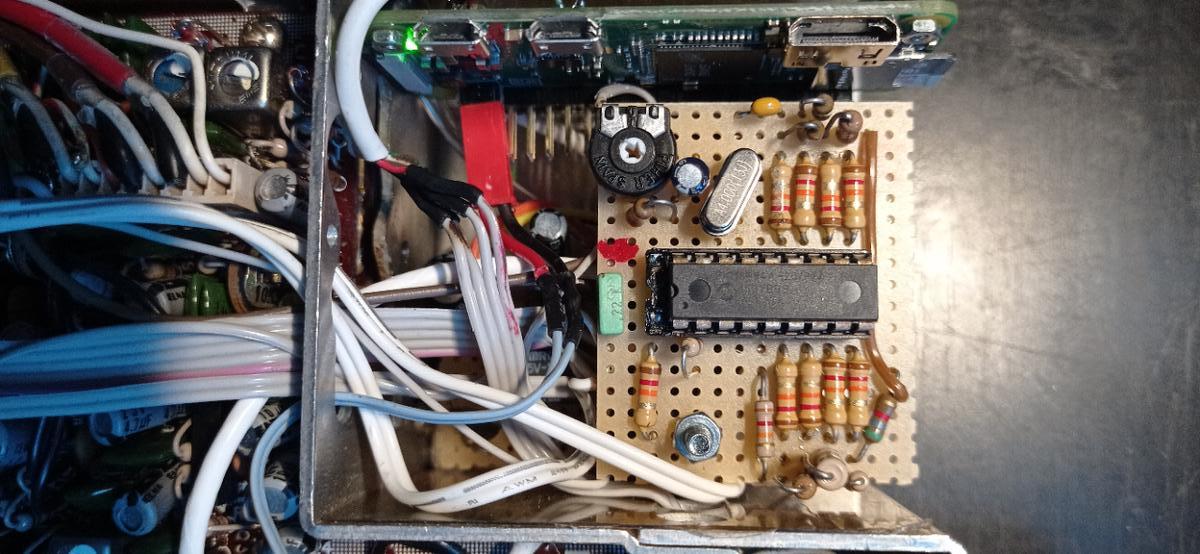
On the top right you see the raspberry zero. It is possible to connect the network via a din connector on the back, connected to the raspberry.
The ctcss circuit (16f84) is controlled via a button on the front (4 frequencies, with led notification ). At the back there is a reset button, for resetting the raspberry, if nessesary.
I also build an auto shutdown circuit in. After quiting the tranceiver via the normal volume switch, the raspberry is shutting down, and after 30seconds the power is disconnected.
I started with datv. I installed on a raspberry rpidatv with the latest program from the BATC website.
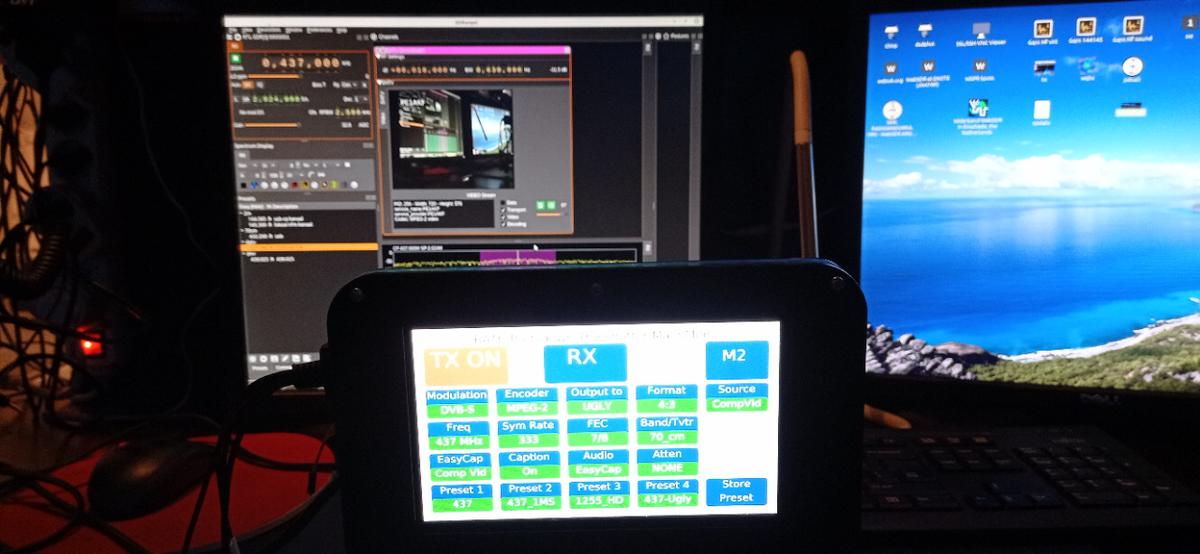
For receiving I use the SDRAngel program. I had to compile it on my Linux OS.
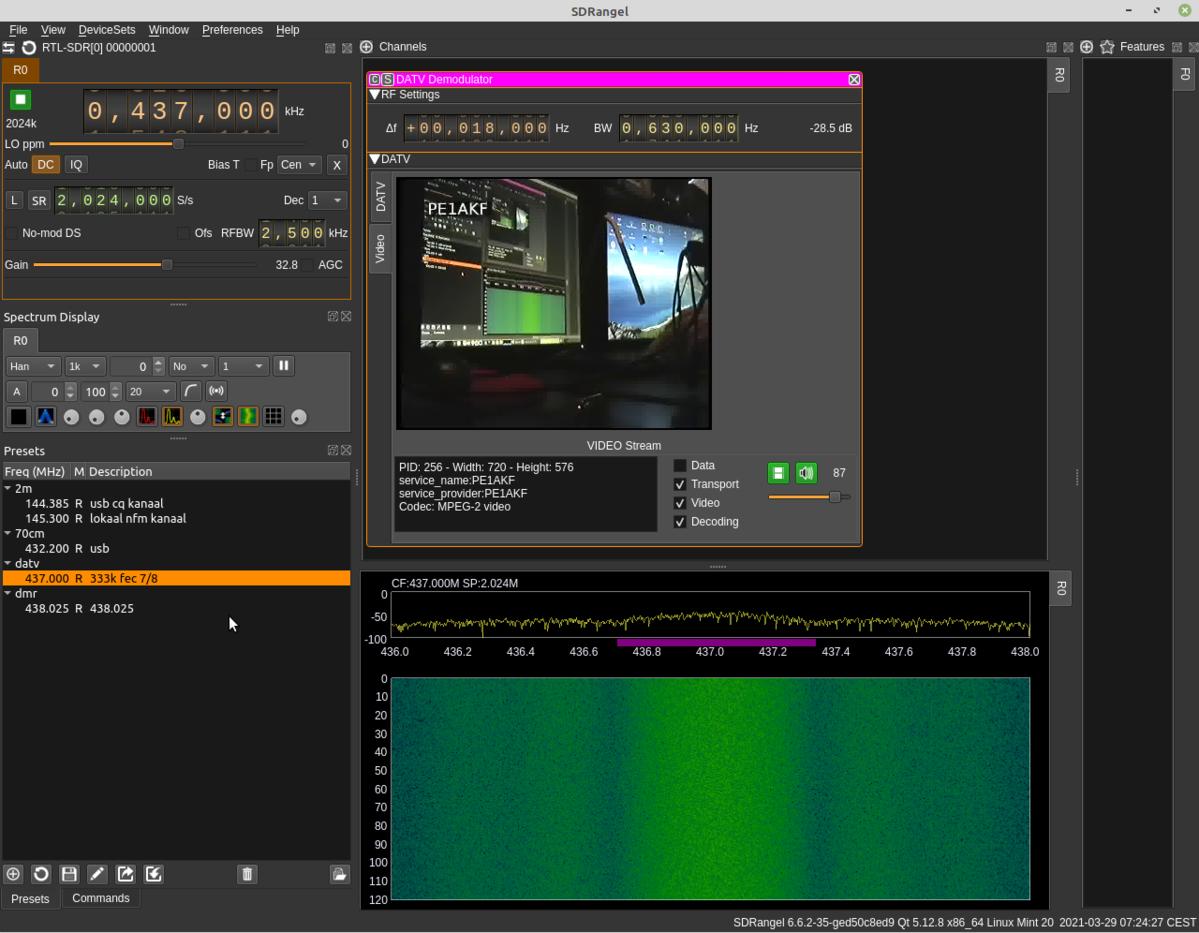
SDRAngel
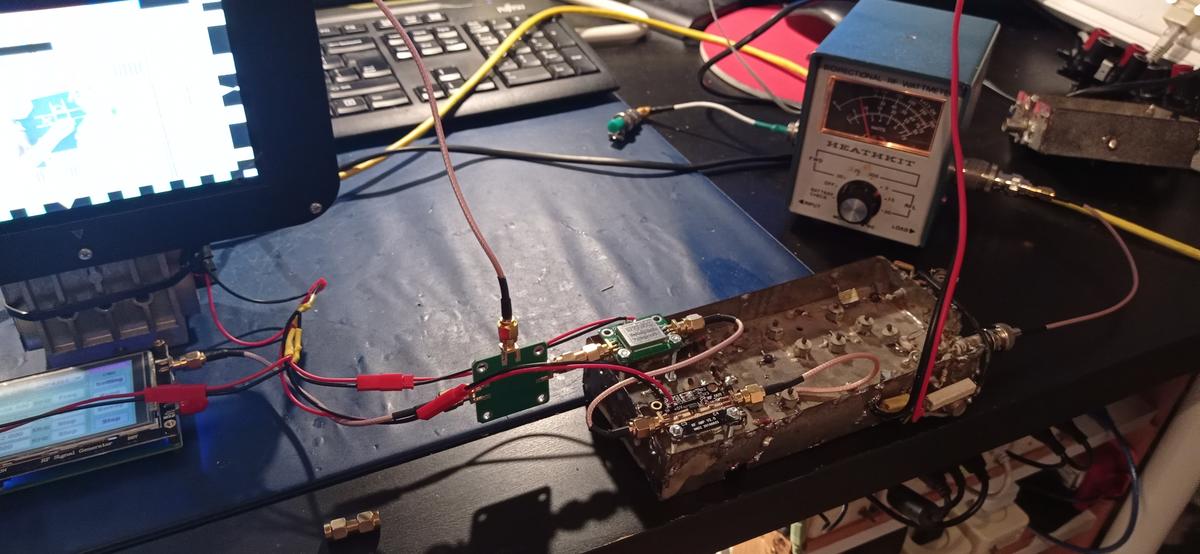
Datv signal 146.5mc mixed with 1108.5mc to 1255mc. Used 2 small amplifiers followed with a DF8QK mixer used as amplifier with a BFQ34 in the last stage. With a BFQ68 Amplifier the output is about 1 Watt.
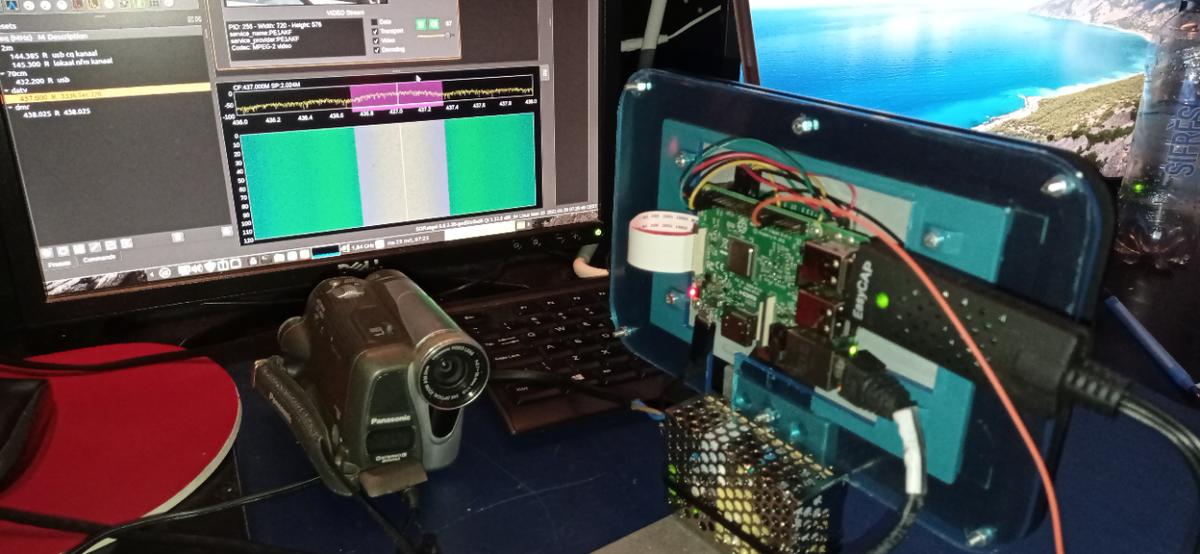
Camera input via easycap. Transmitting via ther raspberry (b3).
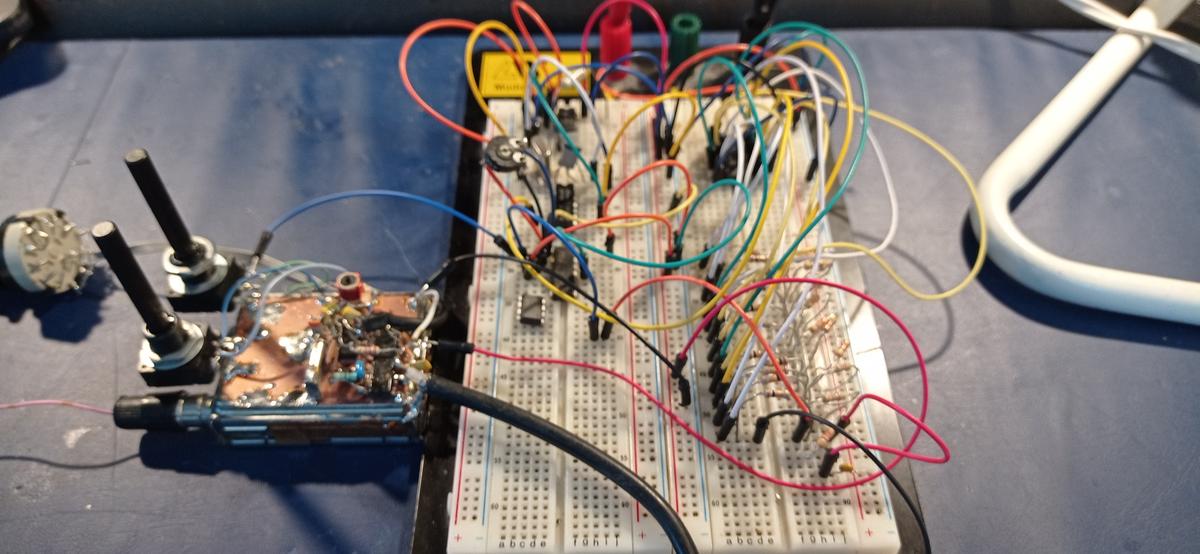
I build a panoramic receiver for transmitter adjustment. With a SDR is adjustment hard to do, because of the delay. With this panoramic receiver there is no delay.
The panoramic receiver has a 4mc oscillator with divider (4060), a 4040 as r2r sawtooth controller, a lm324 to expand the sawtooth voltage (24volt). The sawtooth sweeps the old tv-tuner.
It uses a simpel oscilloscope bought by Ali Express, with a simple modification.
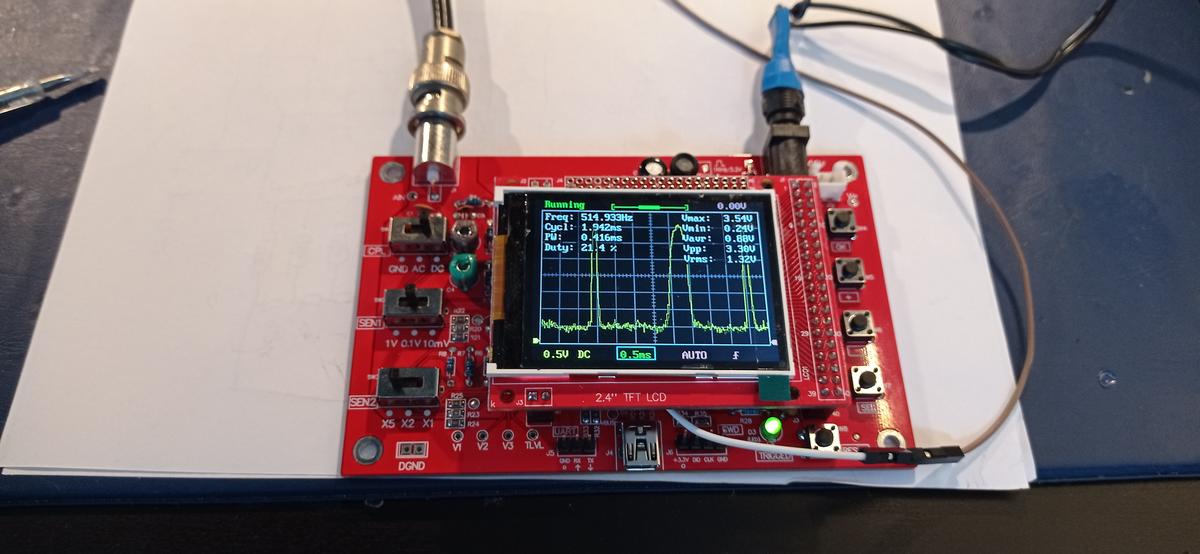
This is the scope from AliExpress. The panoramic receiver uses an old tv-tuner, with a mixer to 10.7mc. A ca3089 is used as mf and detector. The output of the ca3089 goes to the scope.
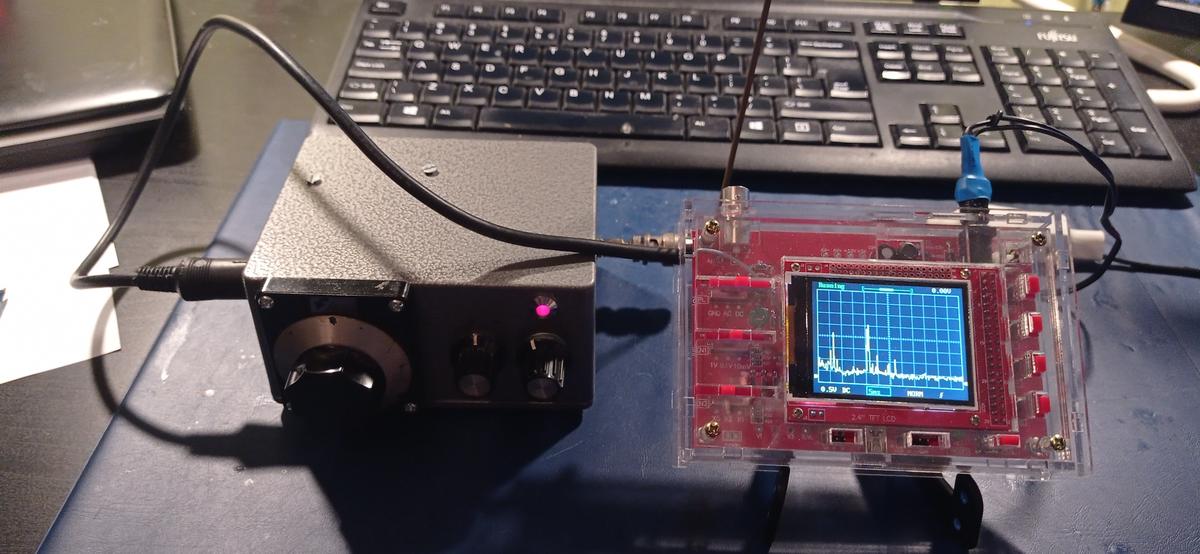
The frequency range is 45mc till 800mc. The next to implement is a converter, for receiving the range 800 - 4400 mc. The output of the converter is 700mc on the panoramic receiver.
I ordered a rf-amplifier, mixer and oscillator form AliExpress.
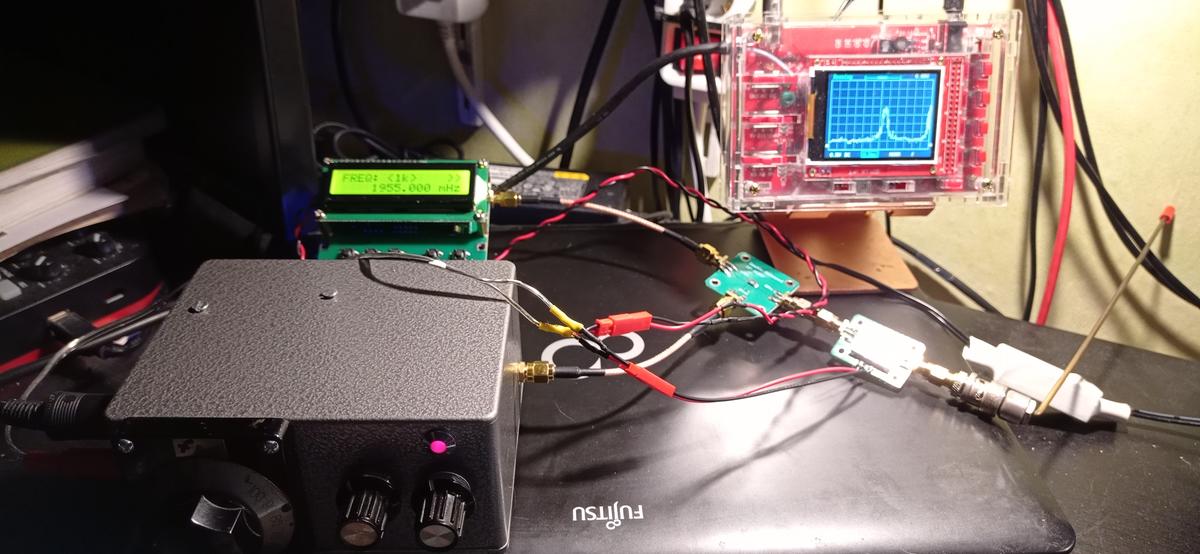
I received a mixer, an oscillator and an pre-amp. I connected them with the panoramic receiver. The oscillator was transmitting on 1955mc, the panoramic receiver on 700mc.
I recieve the datv signal on the panoramic receiver. I did also test to receive wifi signals. The oscillator was tuned to 1700mc and the panoramic receiver on 700mc.
I did receive several signals on the wifi band.
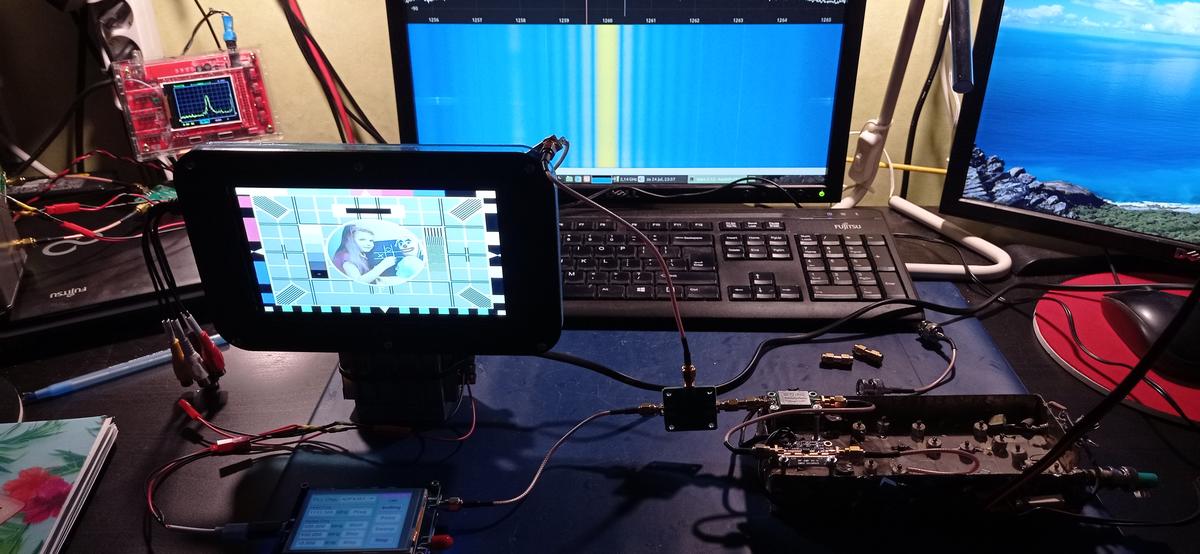
The Datv transmitter working on 1260mc. On the left, in the background, the signal received on the panoramic receiver.
SDR via Router.
Because of the chip problems, there is a delivery problem with the raspberry pi.
The raspberry can be used for serving a SDR, over the internet.
Another solution is to use a router. The handiest way is as the router has openwrt as os.
Then we only have to install the software for sdr use.
The next links are some examples.
MT300 as SDR-Router.
It is very simpel to configure the MT300 as a SDR-router.
You can use it as a mobile SDR server, or you can use it at home.
You can connect it with Sdrsharp. Or with sdrtouch, or with openwebrx.
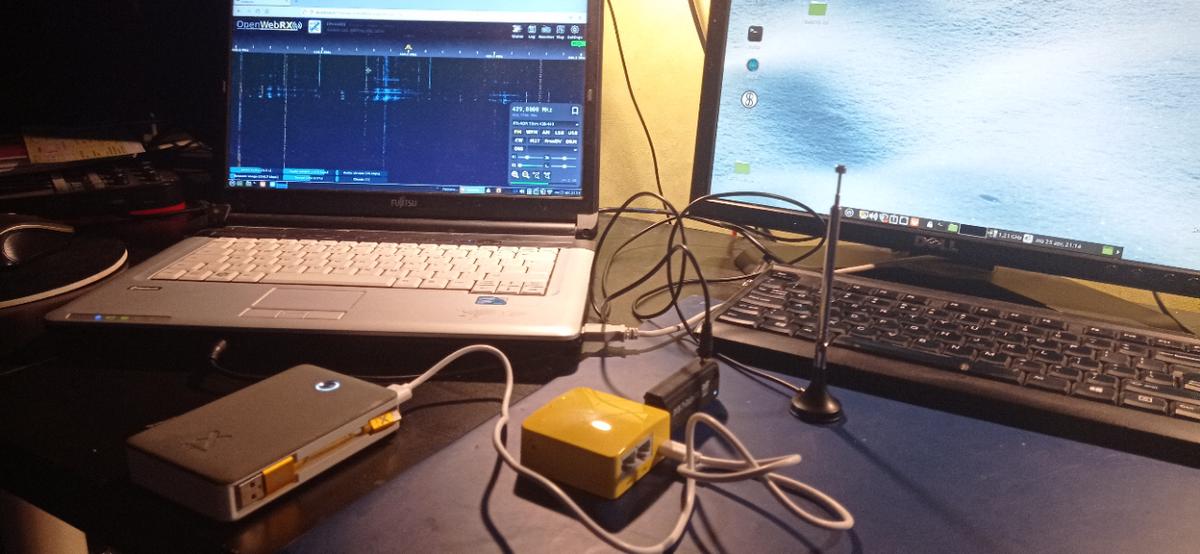
Steps:
1. Connect the router with the local internet connection (ethernet) in the wan port.
2. Connect via a laptop to the wifi, search for MT300. The default password is goodlife.
3. Start the browser and go to 192.168.8.1 .
4. Change the password.
5. For the SDR do:
start putty, address 192.168.8.1
Run:
opkg update
opkg install rtl-sdr
opkg install librtlsdr
To start the connection, do:
rtl_tcp -a 192.168.8.1 -p 1234
6. Start sdrsharp, configure the ip-address, samples and start sdrsharp.
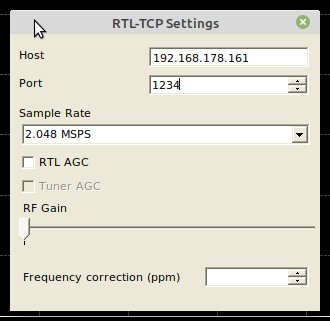
use the ip-address 192.168.8.1, port 1234
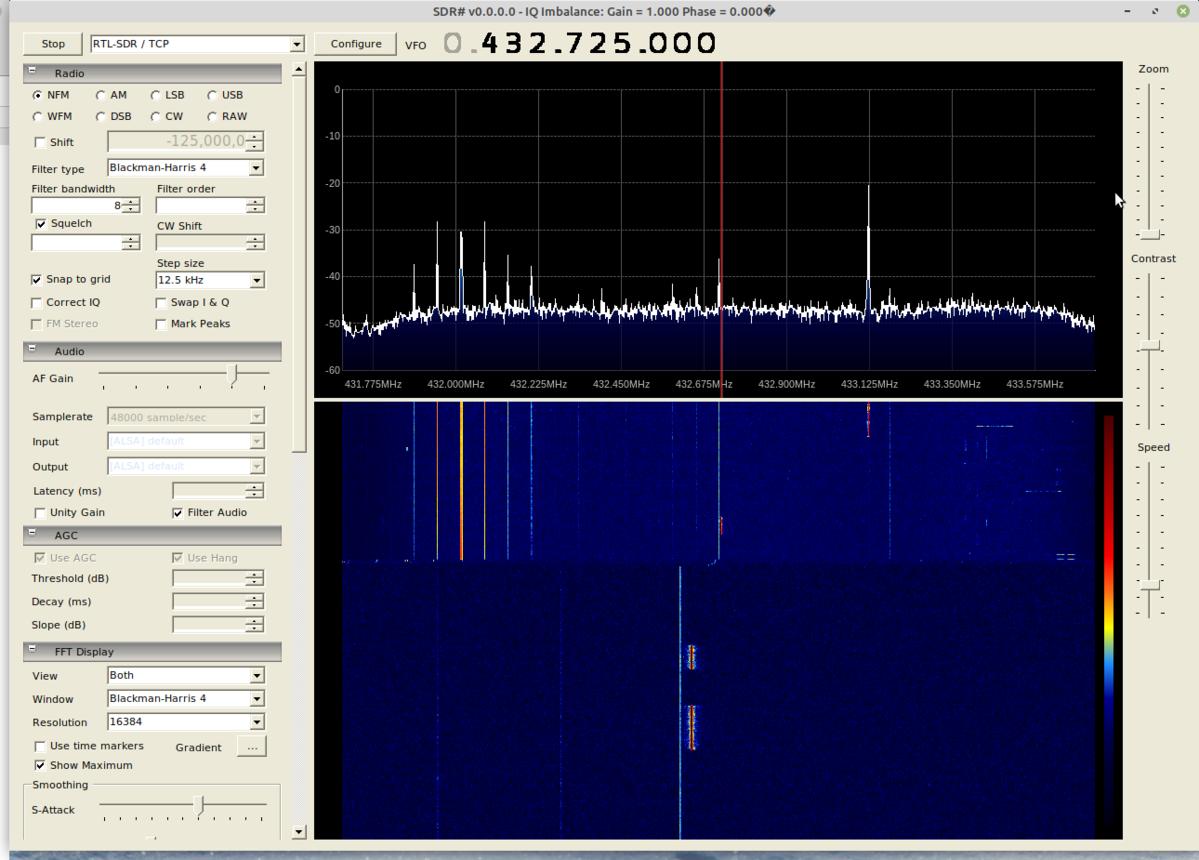
SDRsharp used in Linux Mint.
After a restart of the router, you have to start the tcp command again.
To prevent this, you have to make a script and make this autostart, after a router restart.
7. Create a script, like tcp.sh
while :
do
rtl_tcp -a 192.168.8.1 -p 1234
sleep 3
done
save this.
The loop prevents that a crash will stop the connection, after 3 seconds the connection is ready.
8.autostart:
place in /etc/rc.local, last line : /root/tcp.sh &
save the file.
9. Restart the router and test the connection.
10. Connect to the configuration screen via the browser, to change the wifi password (192.168.8.1)
You can also use the sdr-router on your local network.
To accomplish this, forward the port 1234 in the firewall option, port 5000.
The router gets from your local router an ip-address.
Now you can reach the sdr-router on your local network, with the ip-address (from the dhcp) and port 5000.
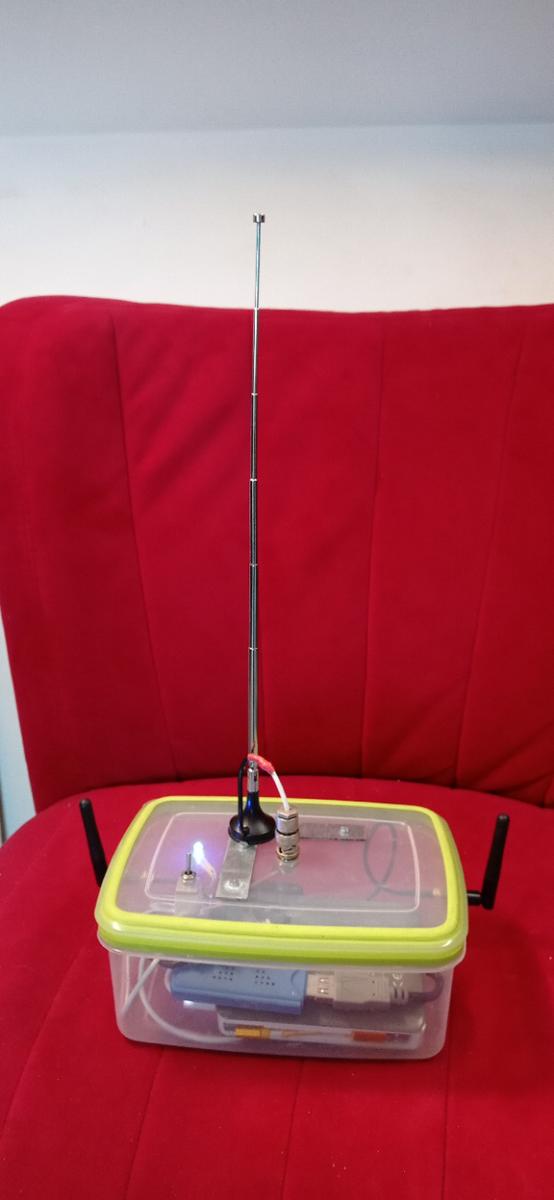
I build a SDR in a plastic box for mobile receiving.
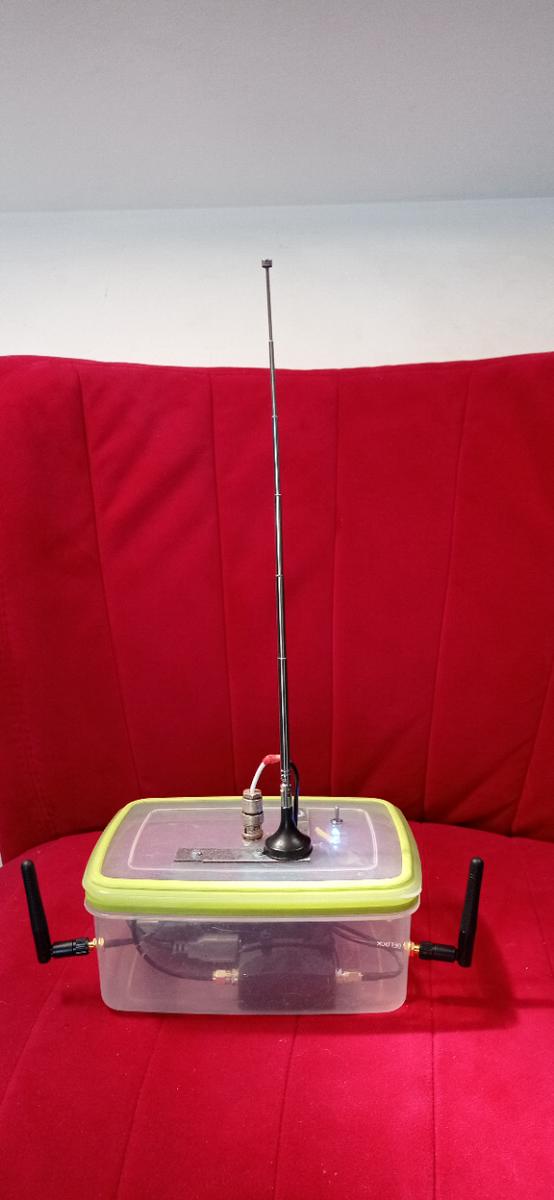
It is using the mt300, with external antenna's.
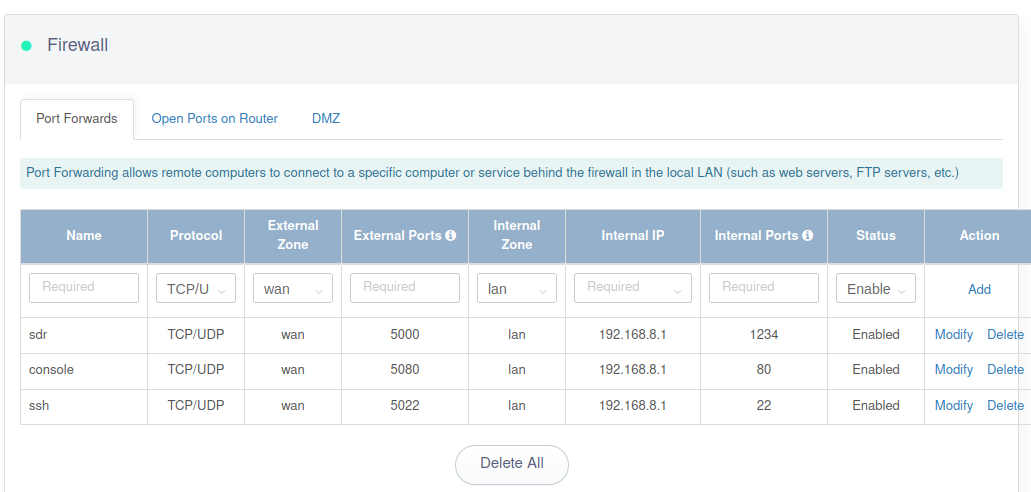
I also forward the ssh port (22 to 5022) and the configuration port (80 to 5080).
Sdr-router used by openwebsdr.
I did install openwebrx on my laptop. In the configuration file of openwebrx I added the sdr-router address.
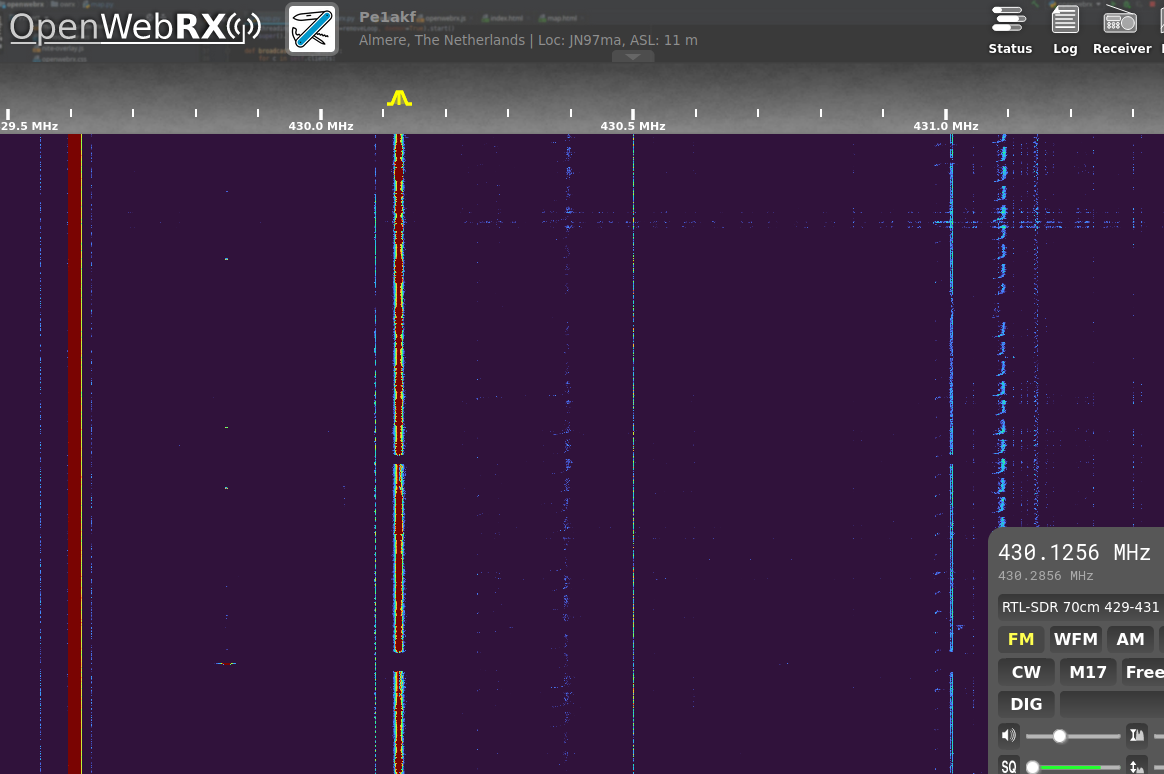
For automation, I made a script that starts openwebrx and start the browser. After closing the browser, the openwebrx connection is killed.
Script start_openweb.sh:
cd /home/[user]/openwebrx
./openwebrx.py &
sleep 7
firefox http://[ip-address]:8073
sleep 2
kill -9 `ps -ef | grep openwebrx | grep -v grep | awk '{print $2}'`
kill -9 `ps -ef | grep rtl_tcp_connector | grep -v grep | awk '{print $2}'`
kill -9 `ps -ef | grep csdr | grep -v grep | awk '{print $2}'`
In config_openwebrx.py:
sdrs = {
"rtlsdr": {
"name": "RTL-SDR ",
"type": "rtl_tcp",
"ppm": 30,
# # you can change this if you use an upconverter. formula is:
# # center_freq + lfo_offset = actual frequency on the sdr
# # "lfo_offset": 0,
"profiles": {
"70cm 430": {
"name": "70cm 429-431",
"center_freq": 430500000,
"rf_gain": 32,
"samp_rate": 2048000,
"start_freq": 430500000,
"start_mod": "nfm",
}
},
"remote": "[ip-address]:5000"
}
}
Antenna.
I use a portable antenna, which have 3 parts. The first part (3 meter) is fixed on the attic flour, through a hole in a tile.
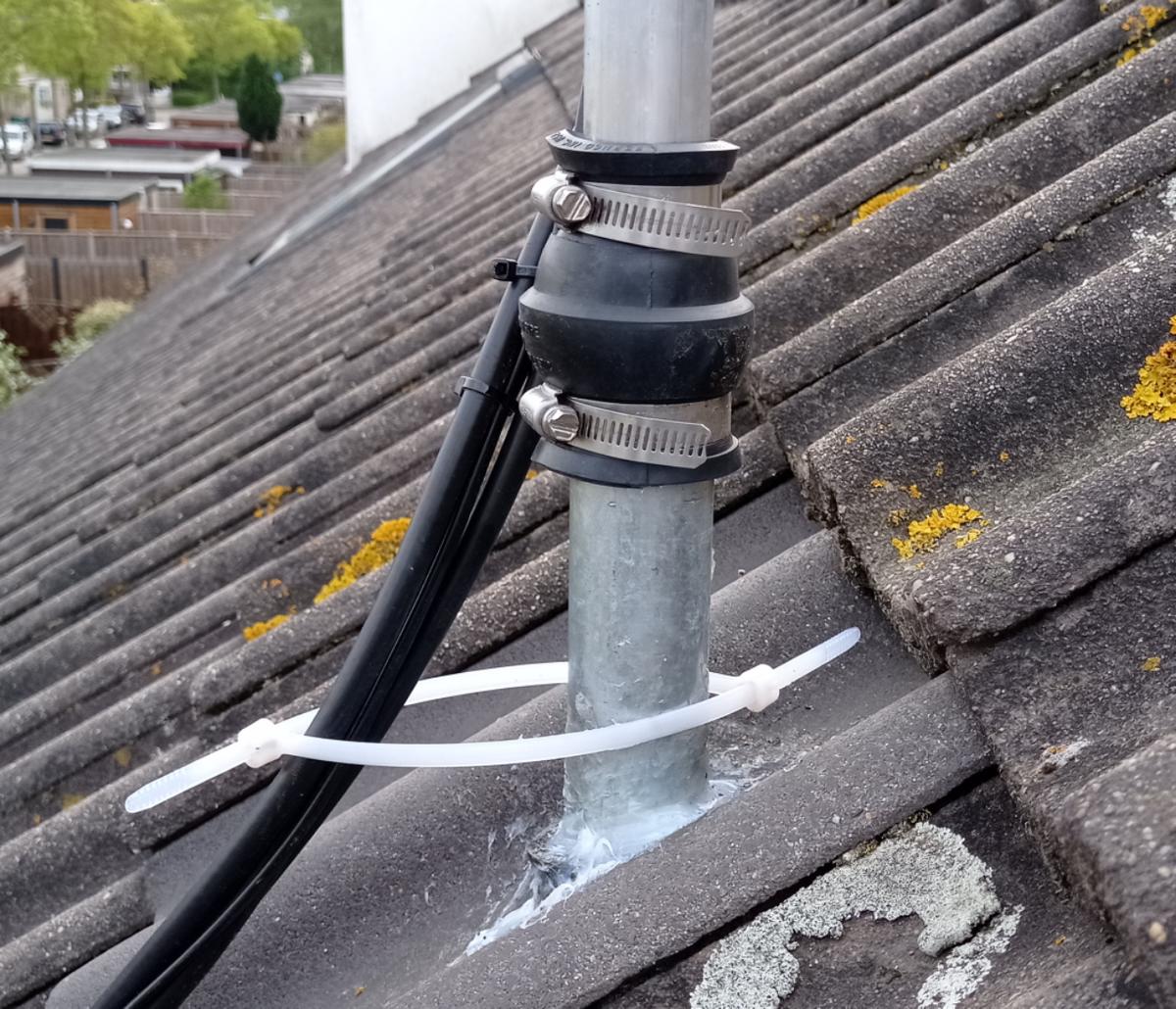
The other parts are 3 meters and 2.75meters long. I can extend them. There are 3 cables used (RG213).
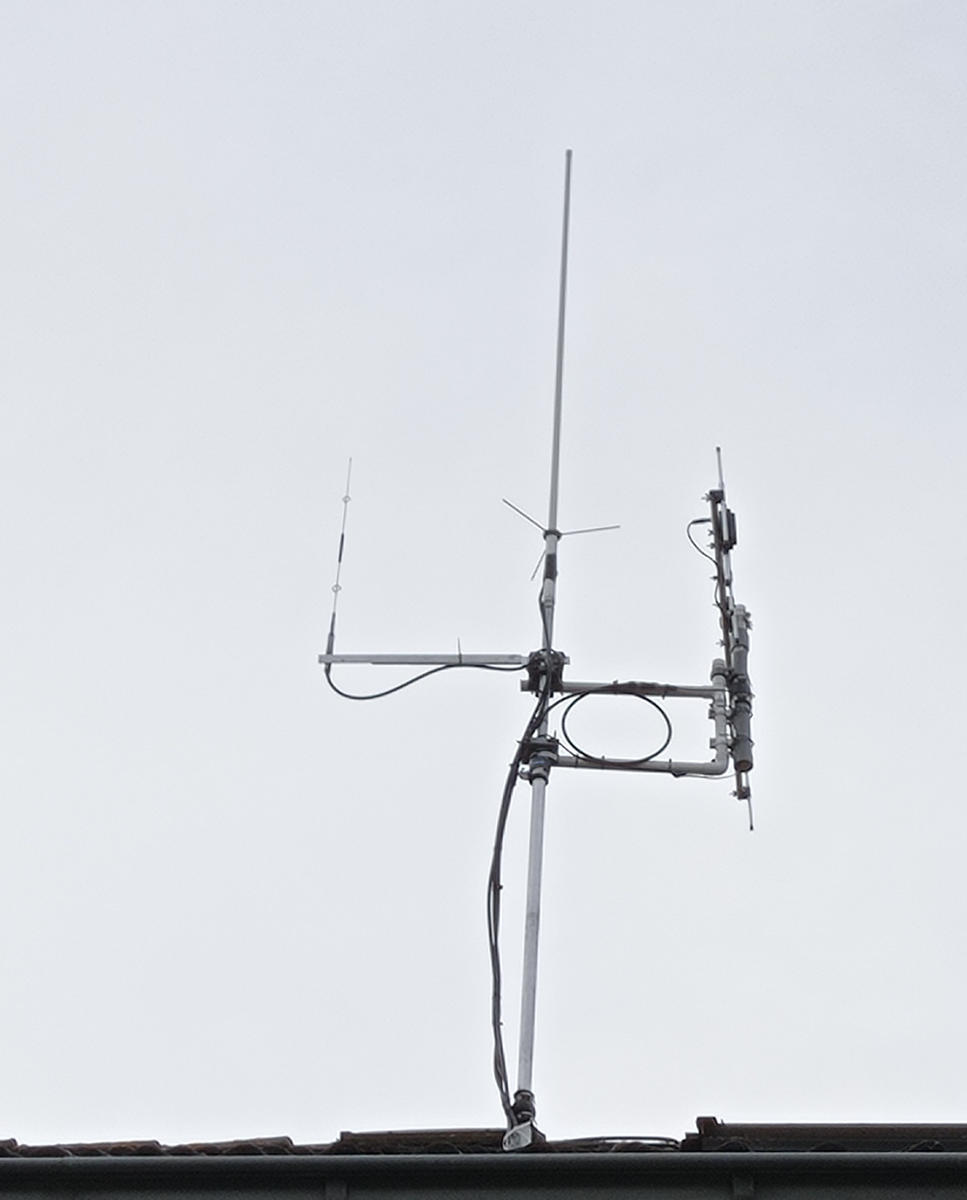
I have 2 multiband antenna's (2meter, 70cm, 23cm). And one yagi for 70cm. This one can rotate with a homemade rotor.
Broadband 70cm Stereo Transmitter.
In the 90's I did build a stereo transmitter for 70cm, with a fm car transmitter.
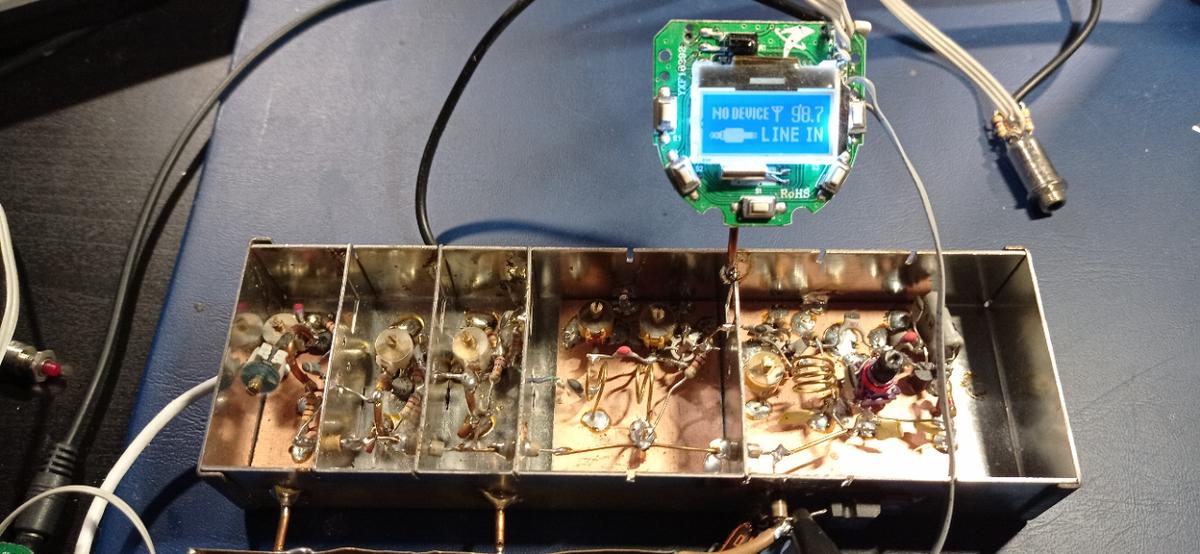
It starts with a x-rtal oscillator on 37.8mc, multiplied with 3 to 112,8mc, again multiplied with 3 to 338.4mc. Then mixed with 98.7mc to 437.1mc .
Then followed with some amplifier stages, with as last part the MHW710. The max. power is about 10Watt. The power is adjustable.
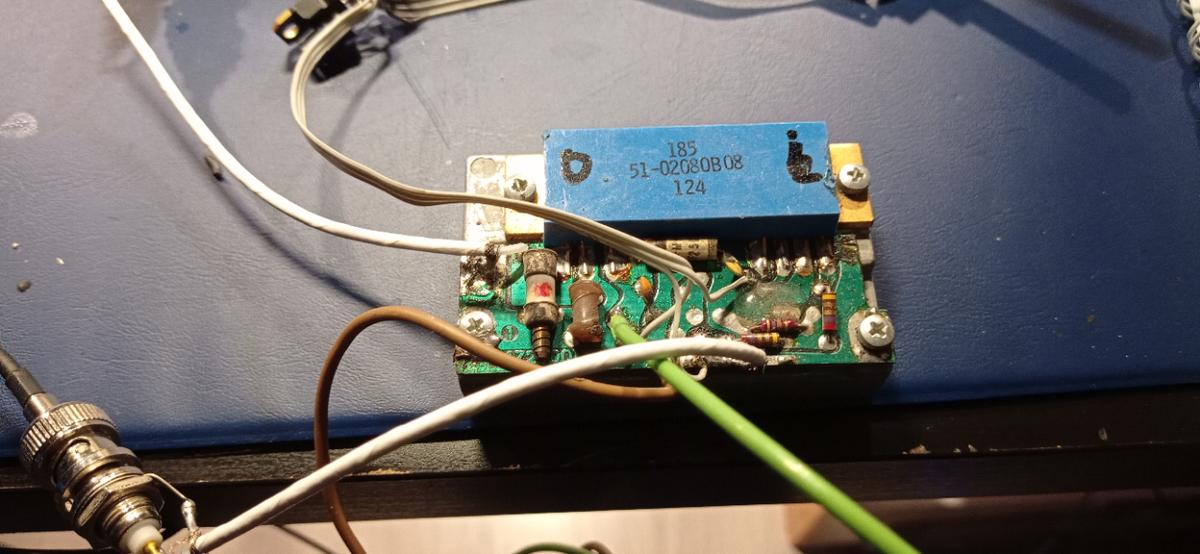
Mhw710 (equivalent)
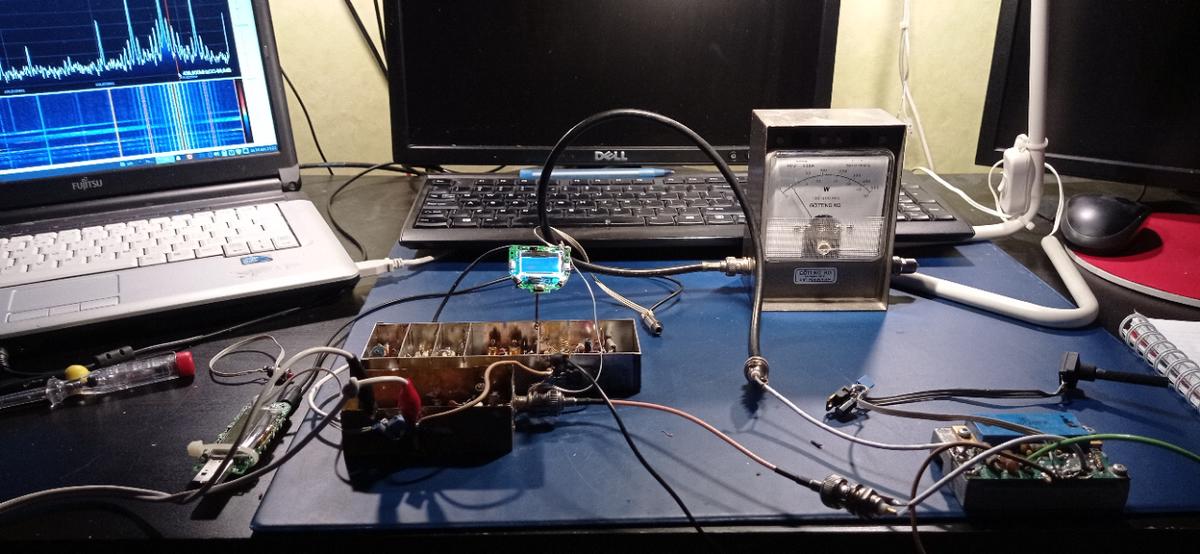
The transmitter in action (on the left the mp3 player for the call).
Thf7 controller.
To use the thf7 in a car, is a little complicated. It has a small screen with little buttons.
A better way is to use a controller with a color screen, with touch buttons.
Tthe solution is to use a raspberry with a 5 inch touch screen a usb to serial converter and a interface for the thf7.
On the raspberry I use a python program for selecting the frequency (memory buttons), a transmit button, scan buttons and
some other handy buttons. It is still in test, later I will place it in a case.
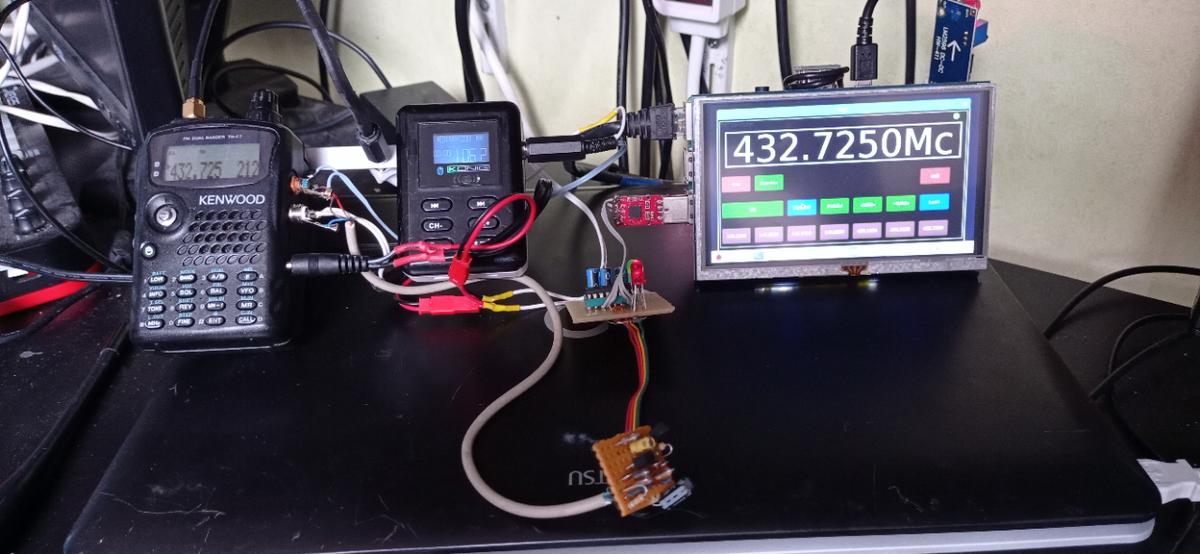
I build it in a case. This case I can put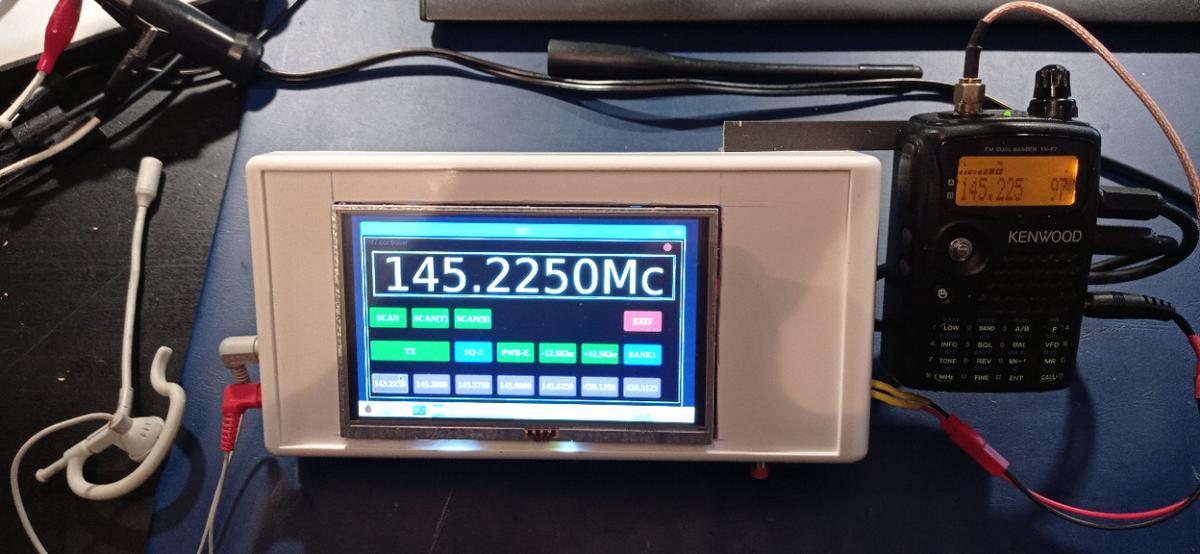 over the mediaplayer in the car.
Aprs with the raspberry.
I installed a raspberry zero W2 with direwolf, gps and rpitx.
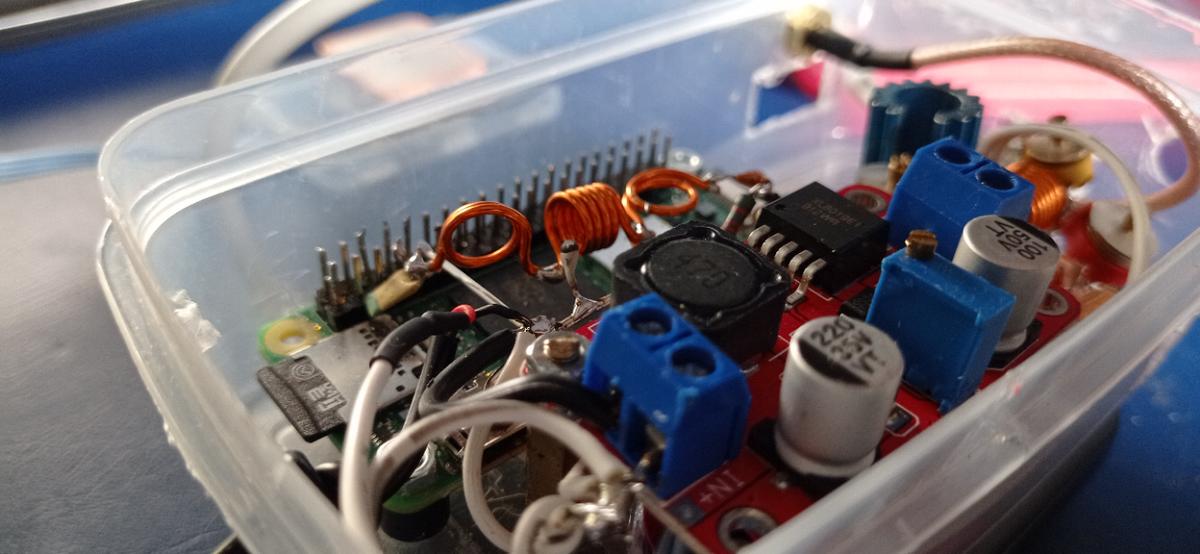
Rpitx is transmitting on 144.800Mhz with a low pass filter and a driver with the 2N3866.
The power is about 300mW. There is no soundcard needed.
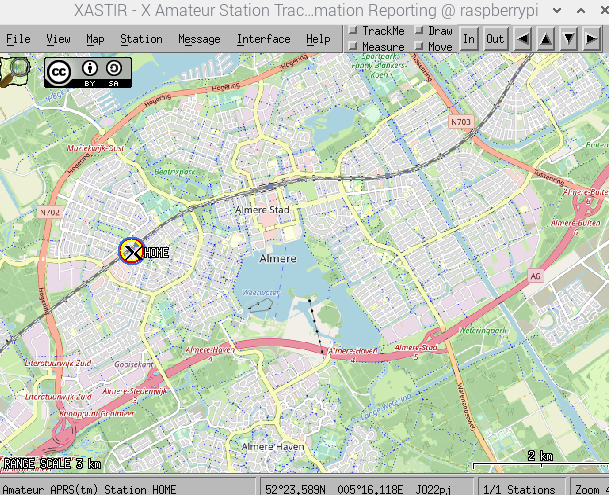
On one of my other raspberries I installed direwolf and xastir and use a sdr for receiving.
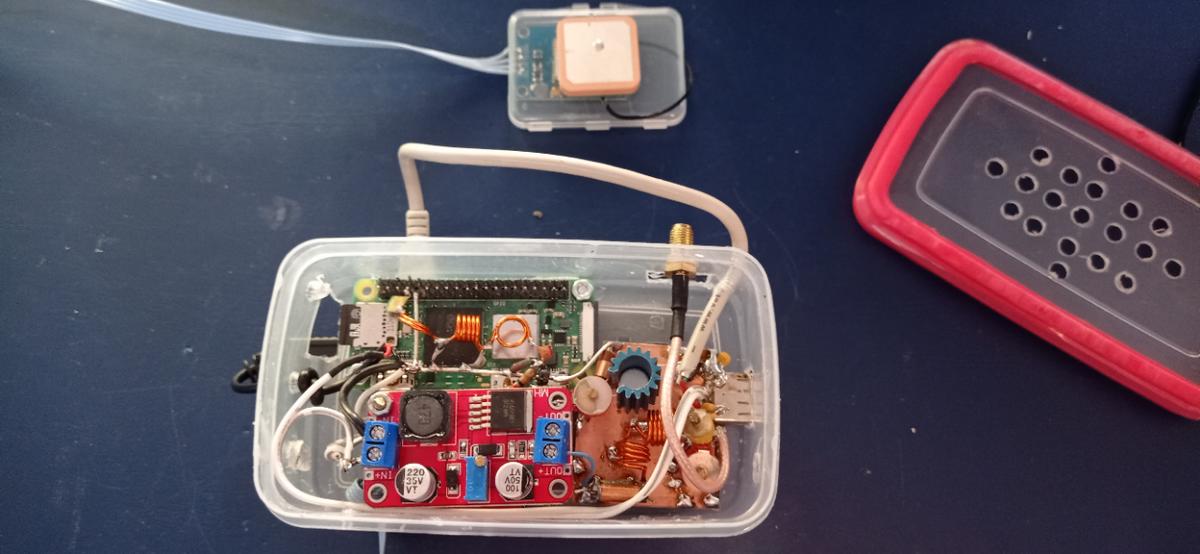
Unfortunately there are amost no aprs stations anymore in the city.
So i have to test it with my own receiver.
I also use a up-converter to rise the voltage to 18volts, for the 2N3866.
Odroid with SDR.
Because of the problems with buying a raspberry, I started with an Odroid.
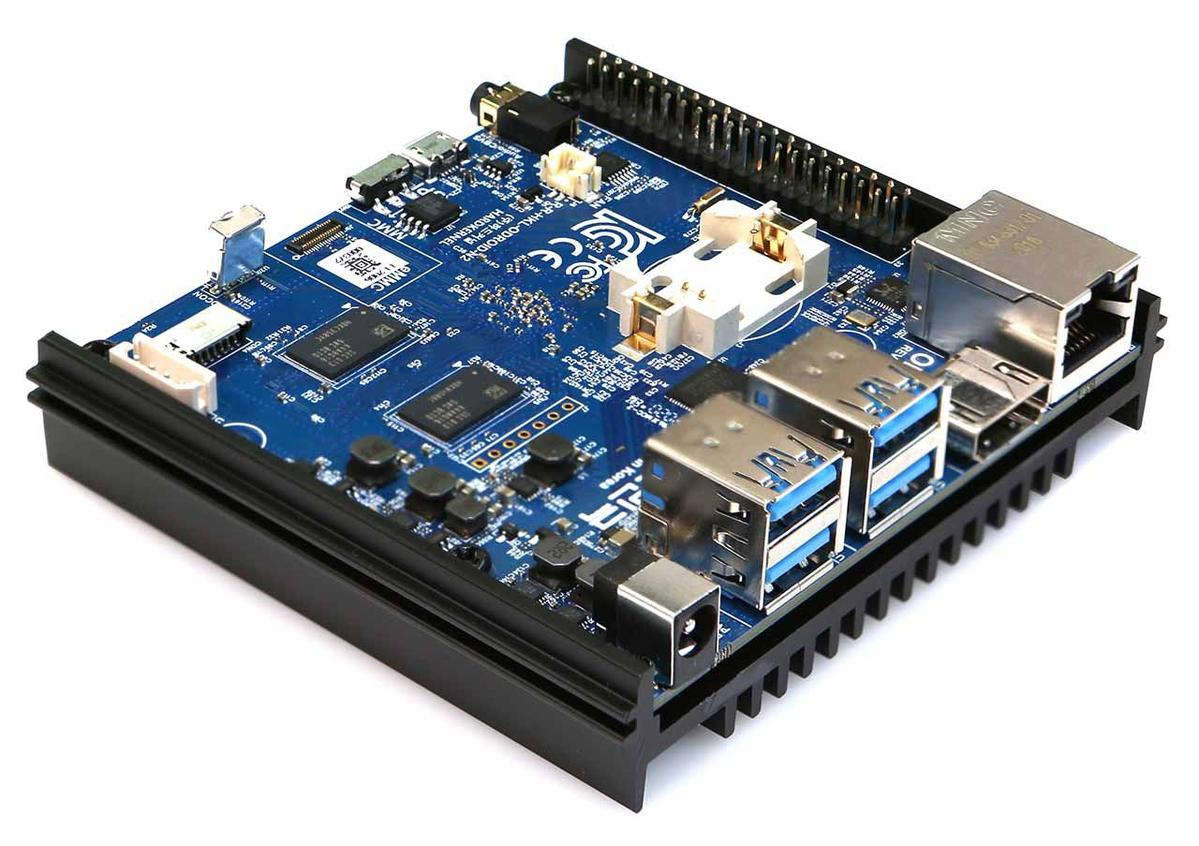
I bought the Odroid N2.
I installed rtl-sdr, gnuradio, gqrx and openwebrx.
It works ok, the Odroid is very fast.
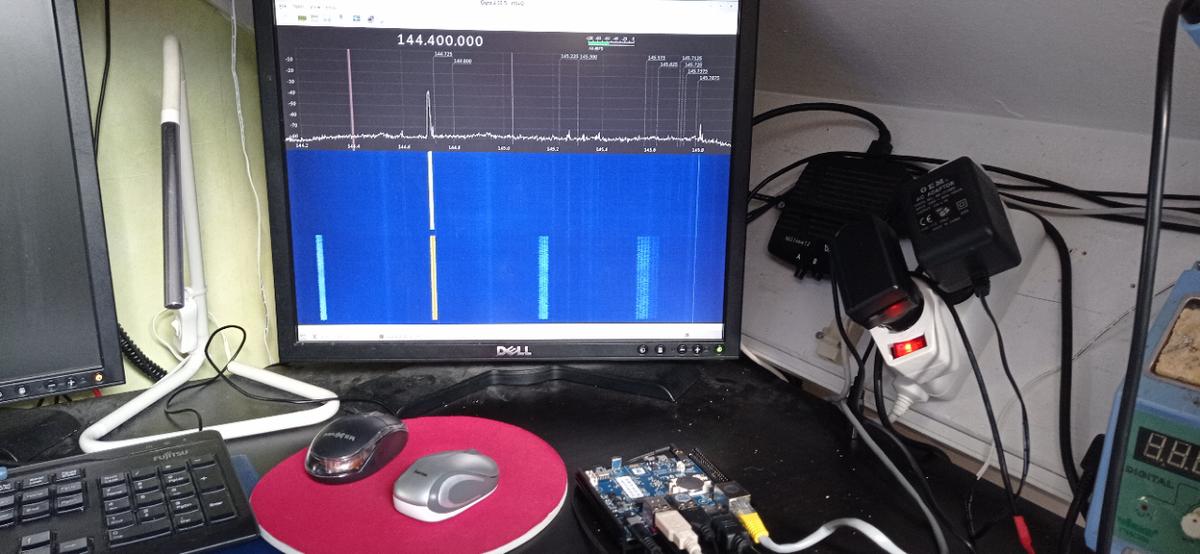
Gqrx running on the Odroid.
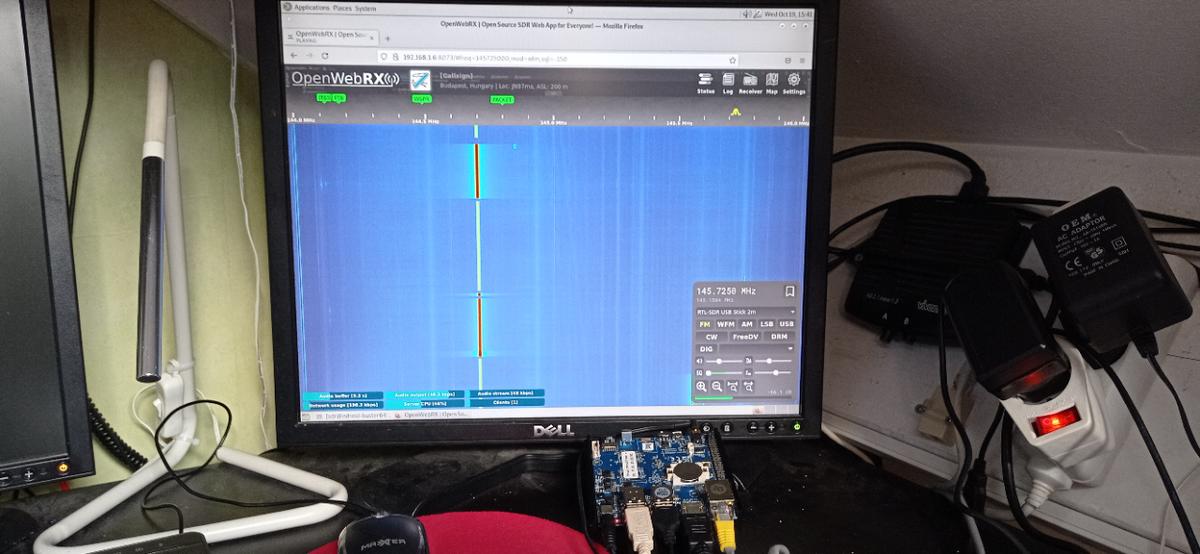
Openwebrx running on the Odroid.
Double Loop Antenna with motor control.
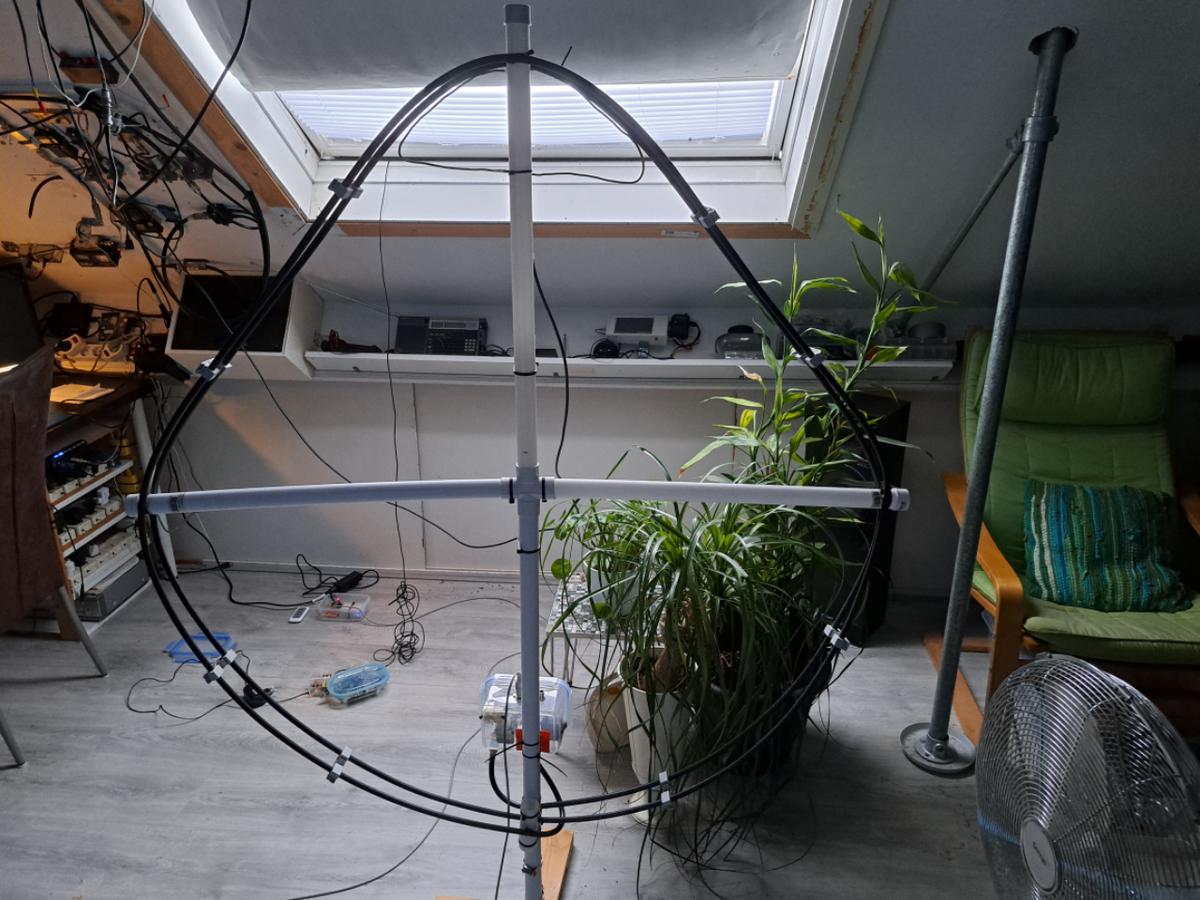
I build a loop antenna with 2 loops.
I used RG213 coax with a motor to tune. It is useable for 80/40meters.
I usu a pickup loop at the top of the big loop, connected with a balun to 50ohm.
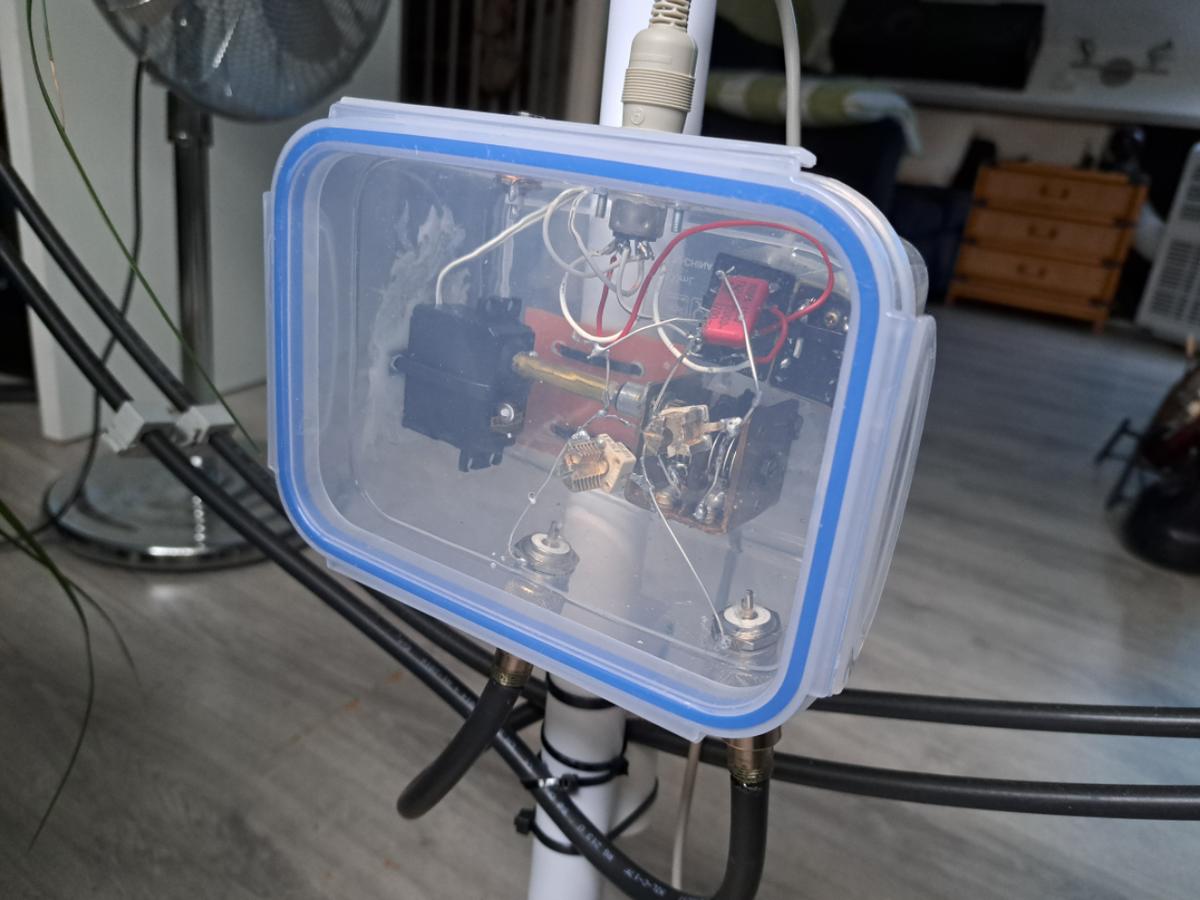
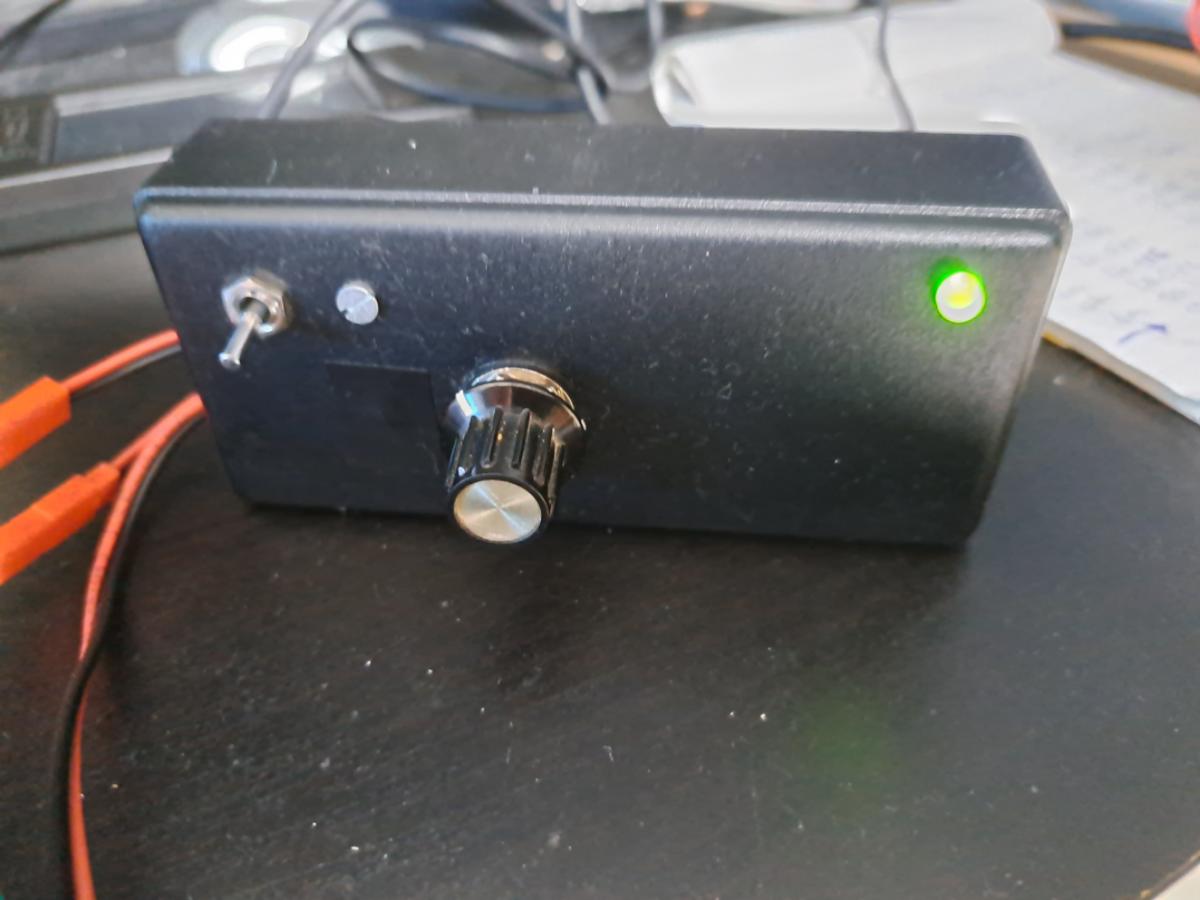
Motor controller.
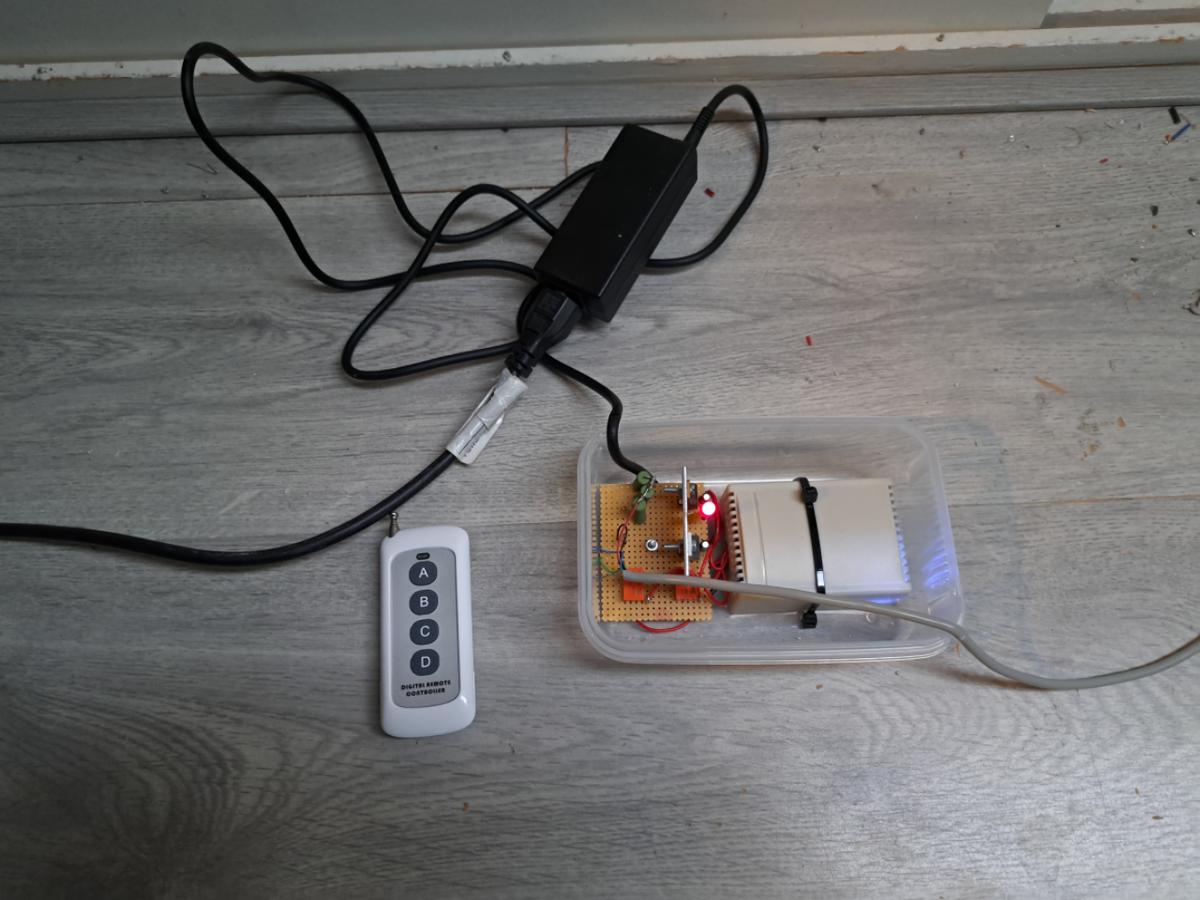
remote controller for tuning and switching (80/40) loop.
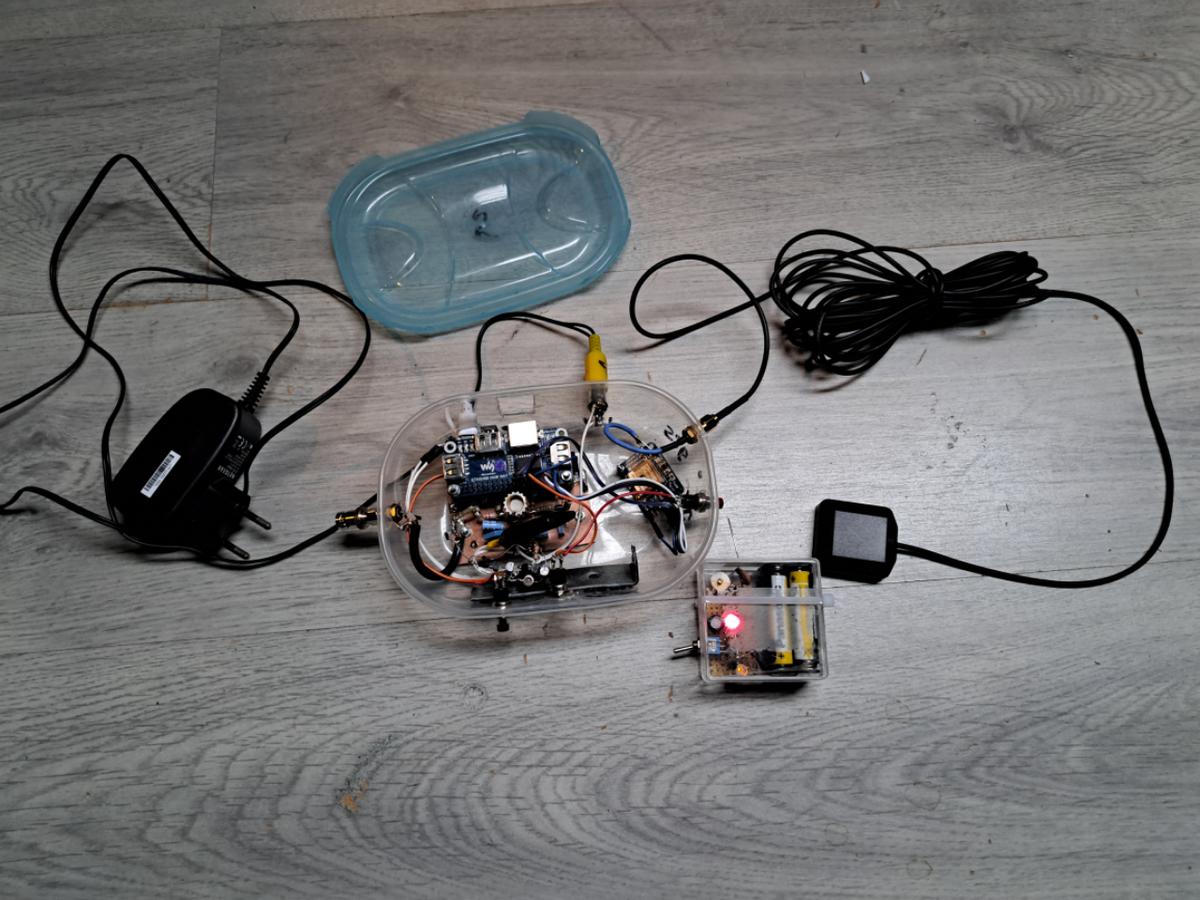
Wspr 40m transmitter with gps and the rpi zero.
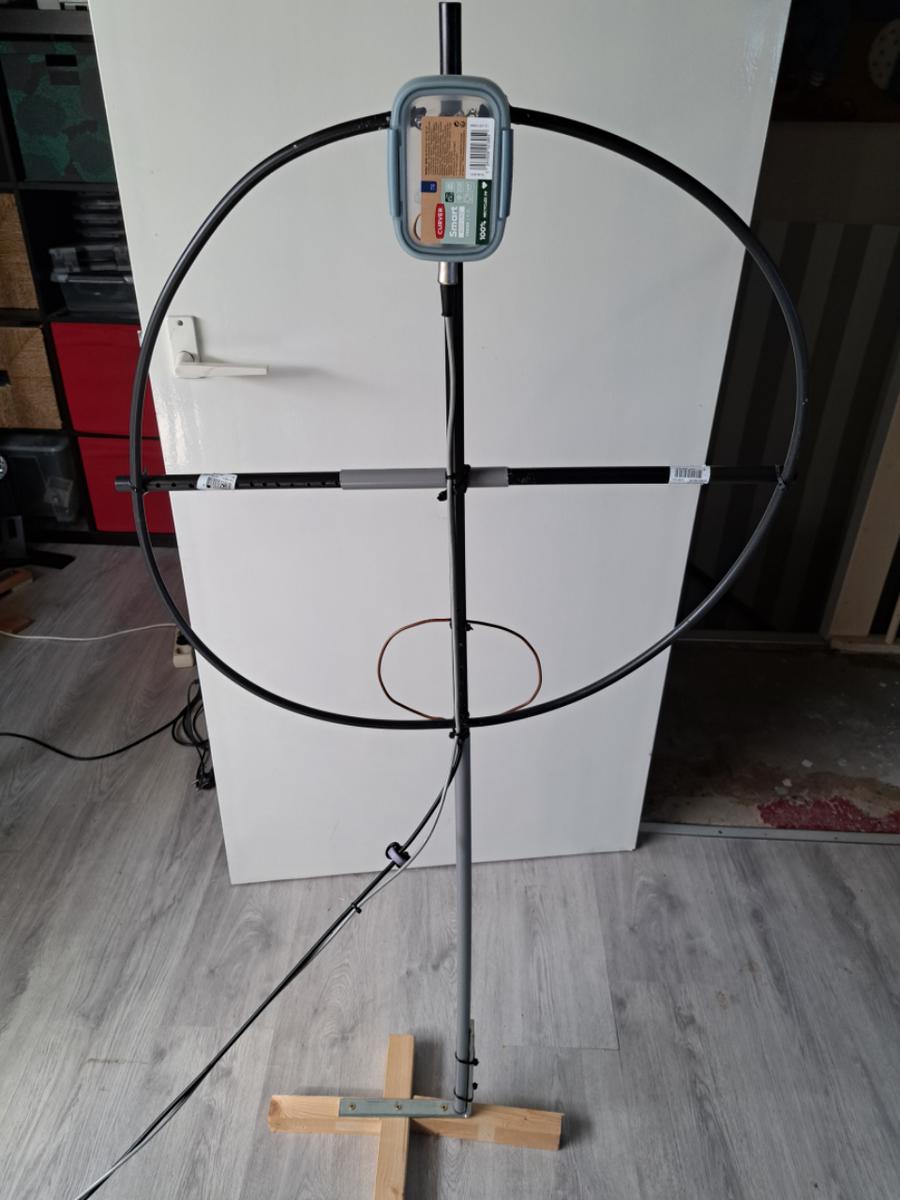
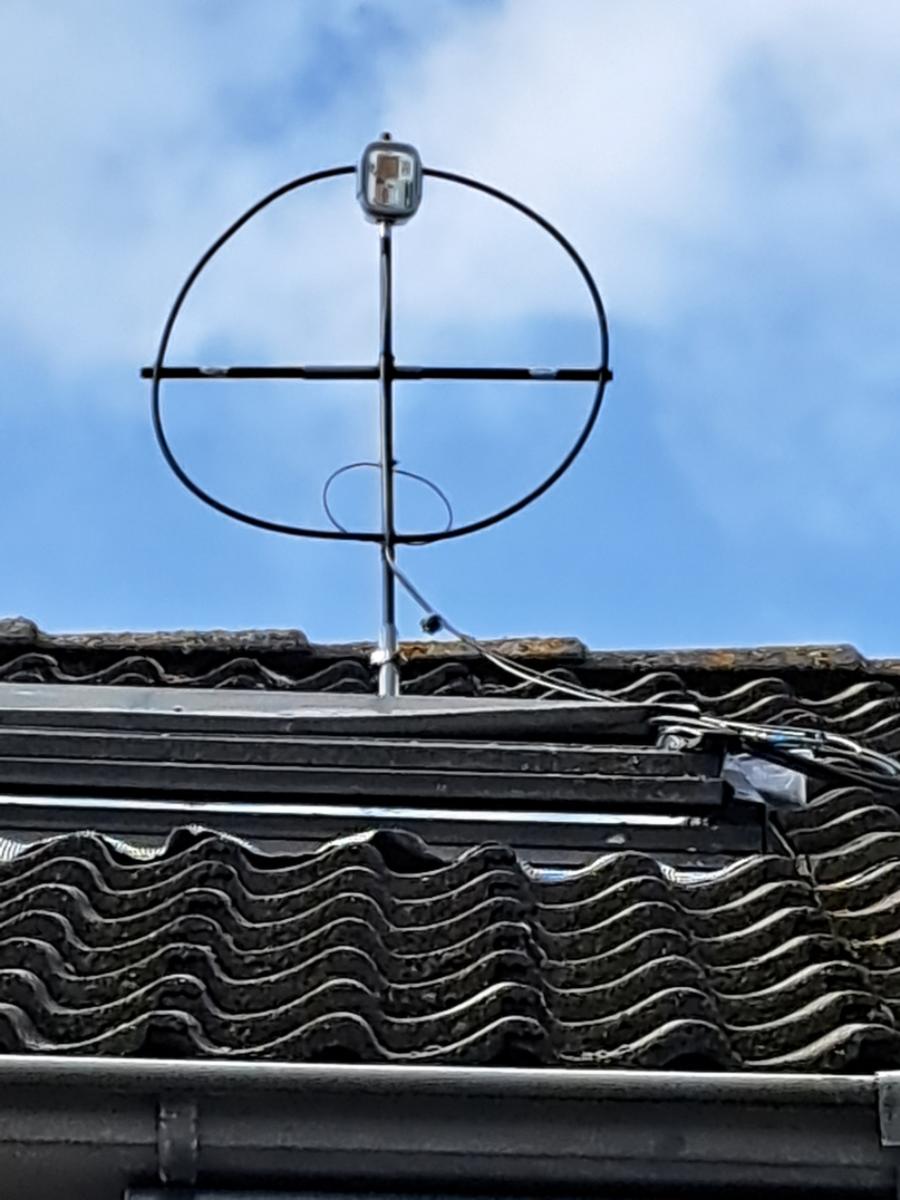
Loop Antenna for 50Mc with motor control.
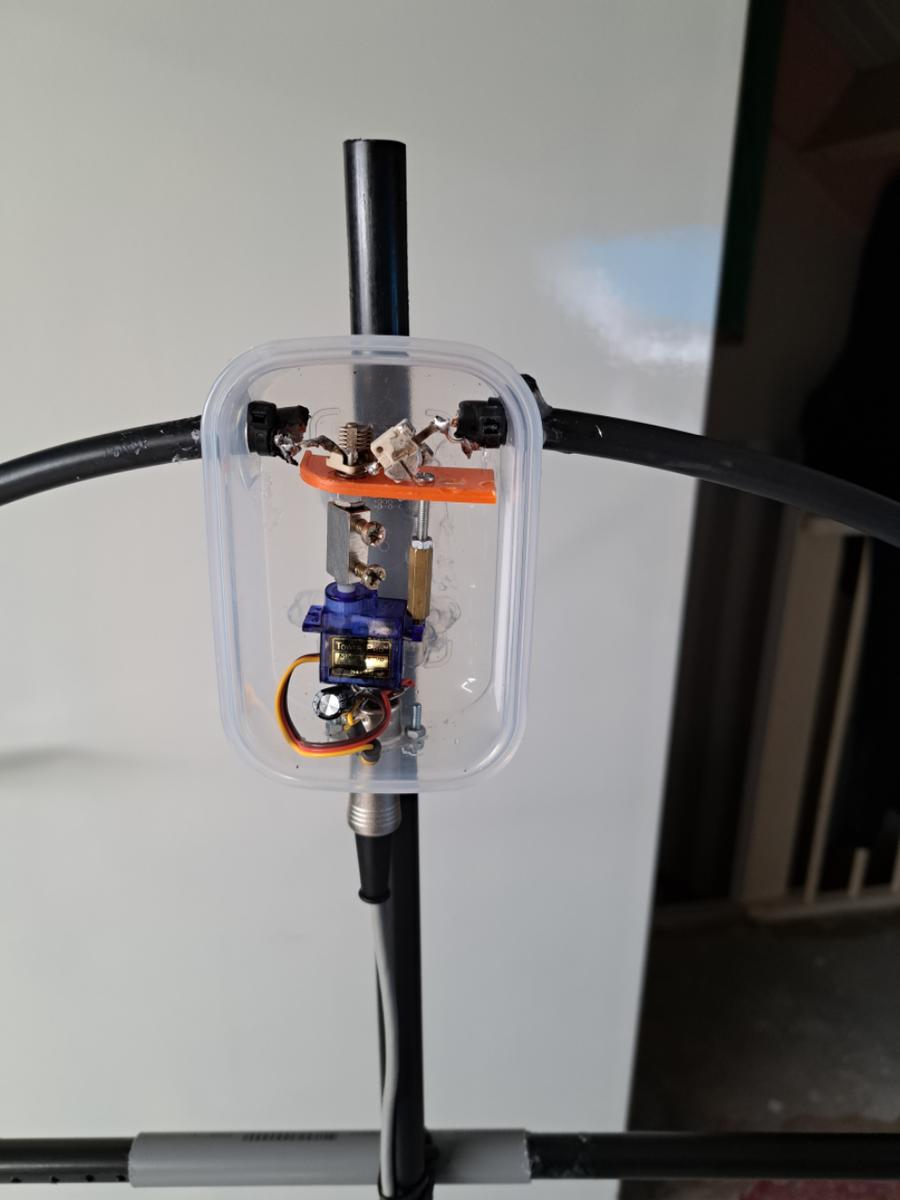
I build a loop antenne with Rg213 with a servo to control the frequency.
Inside the plastic box
The control box
On the roof
New Loop antenna for 80/40meters.
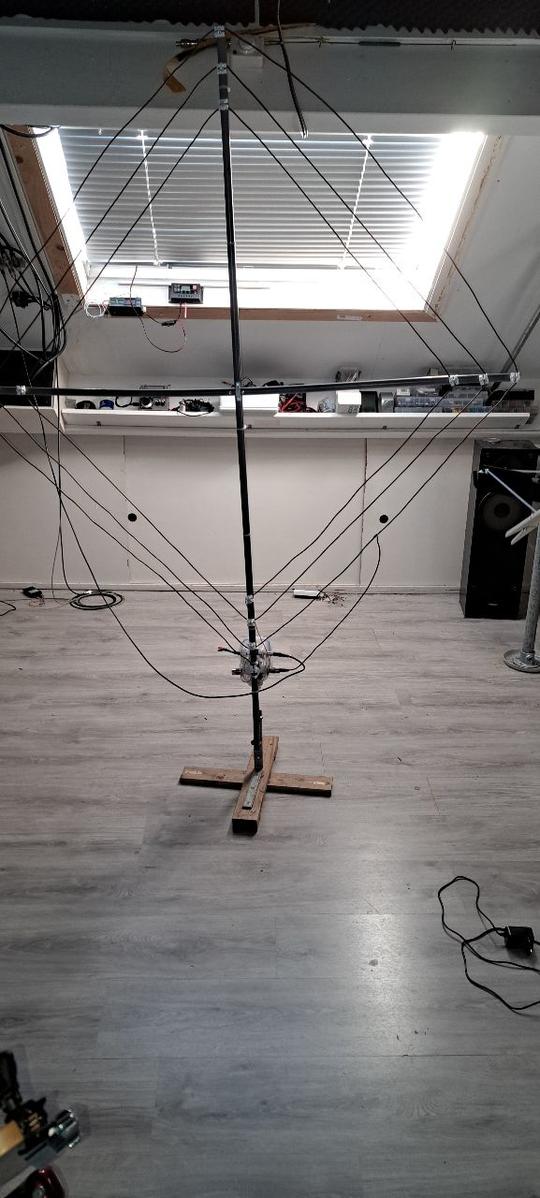
This new loop is made from copperwire.
The loop is controlled via a rc control (868mc). And via a relay it can be switched between 80 and 40 meters.
40meters is switched via contact of one of the copper lines, to make the loop smaller.
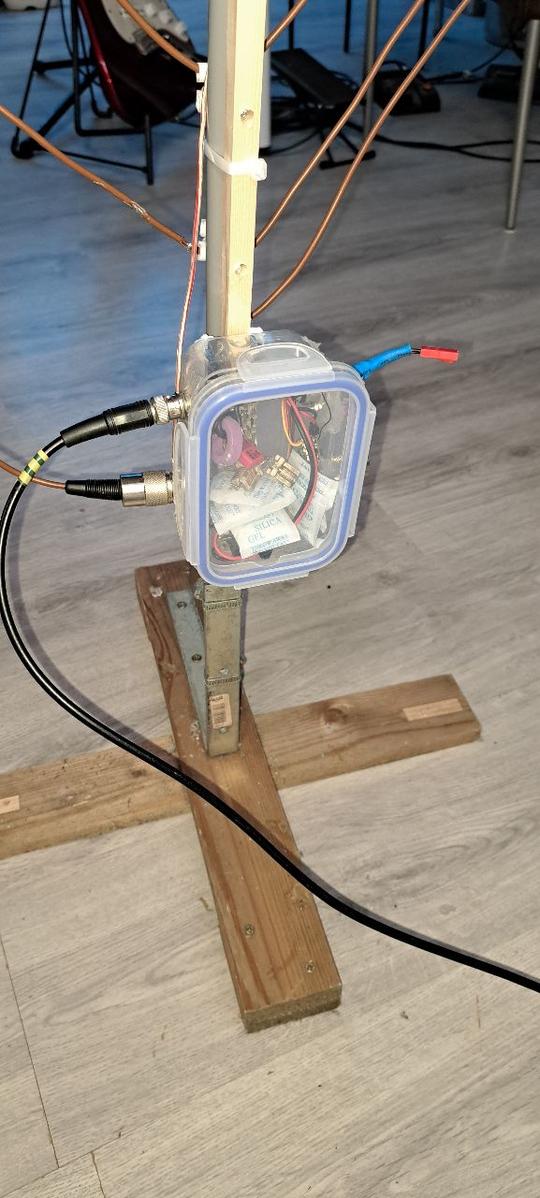
loop with control box.
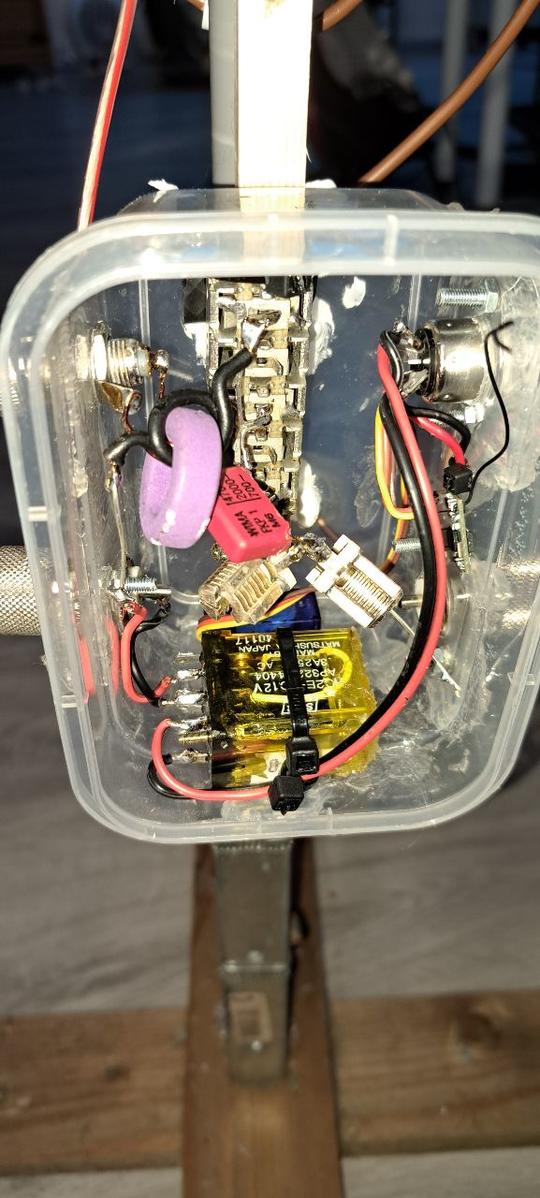
control box
This loop works very good for the new wsprx transmitter.
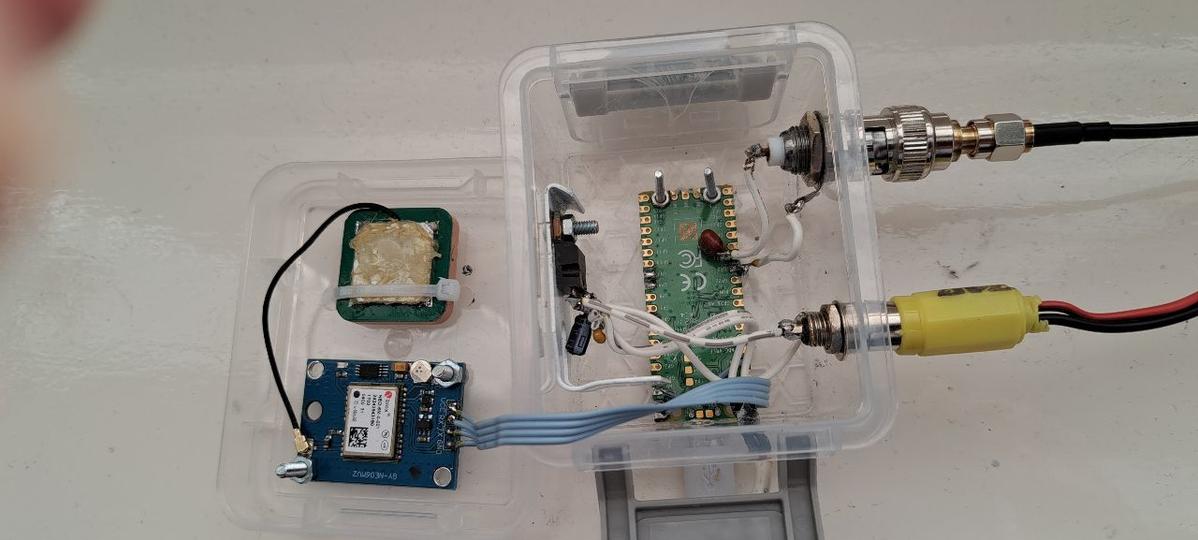
The new wsprx transmitter.
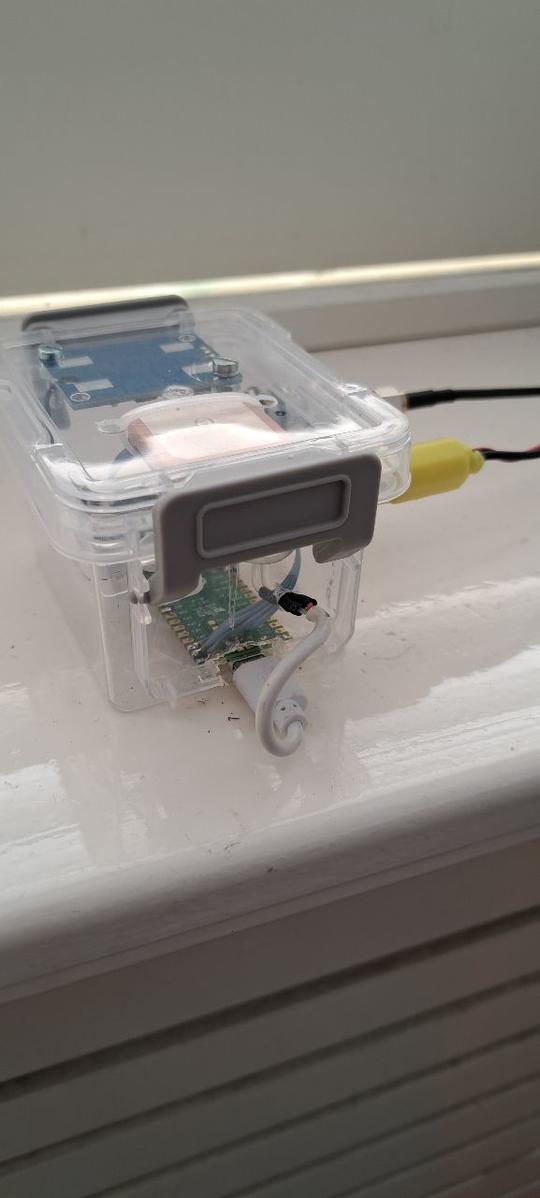
This transmitter is build with a raspberry pico and a gps unit.
The output power is 10dbm. The wsprs transmit at 7.038600 mc.
TIP FOR LOCALISATION REPEATER INTRUDERS.
It is very annoying when an intruder on a repeater is disturbing the connection. They are transmitting silent signals, yelling, etc.
A normal conversation is not possible. And, as always, the normal Ham must suffer the reaction of the goverment, they are closing down the repeater.
What is the solution: use TDOA. TDOA is capable to point the signal of the intruder on a map. So everyone can see where the intruder is located.
TDOA is time-difference-of-arrival. Three SDR's are listening to the same frequency and they are time synchronized via the internet.
When a signal is heard, there is a diffrence in the time of arrival. With that info, it is possible to calculate the location of the transmitter.
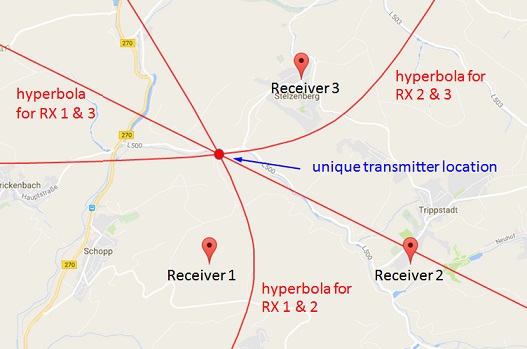
The idee is to have a map on the internet that is connected with the repeater. When a signal is heard, you can find the location on the map.
Probably the intruder is not very happy with this and will stop with his actions. If he continues with his action, the goverment will visit him and stop his actions.
Link for info: http://www.panoradio-sdr.de/tdoa-transmitter-localization-with-rtl-sdrs/
TDOA was tested on serveral signals. The most remarkable was the location of a shortwave signal. There was a suspicion that the signal was located somewere in Russia.
TDO found that the signal was located in St. Petersburg, in Russia.
See https://www.rtl-sdr.com/?s=tdoa